
Futsal formations and tactics: the complete guide to winning
3-1, 4-0 or 2-2? How futsal playing systems work, what each position does, the attacking and defensive tactics that win matches, and how to train them.
In this article · 8 chapters
- The fundamentals: understanding the language of futsal formations
- The most common futsal formations, analysed
- The essential futsal tactics for winning
- Which futsal formation should your team play?
- Which formation suits your team? 🤔
- Putting it into practice: how to train formations and tactics
- FAQ: frequently asked questions
- Conclusion: from strategy to victory
The whistle goes. In a split second the court comes alive with a frantic ballet of short passes, baffling feints and thunderous shots. Futsal is a chessboard played at 200 km/h. But what separates a team that suffers the game from a team that dictates it? The answer is not only individual talent, but a deep understanding and rigorous application of collective strategy.
Mastering futsal formations and futsal tactics means understanding how playing systems (such as the 4-0, the 3-1 or the 2-2) and attacking and defensive strategies fit together to exploit the opponent’s weaknesses and get the most out of your own team’s strengths. It is the art of turning five players into one coherent, formidable unit.
The fundamentals: understanding the language of futsal formations
Before diving into complex patterns, you need to understand why structure matters so much in this sport and which roles make it up.
Why are formations so crucial in futsal?
Unlike 11-a-side football, the small space in futsal means every player is constantly involved in attack and defence. A single poor position can hand the opponent a golden scoring chance. Futsal formations bring:
- Order in the chaos: they give every player clear reference points.
- A division of labour: they define everyone’s basic responsibilities.
- A base for creativity: once the structure is mastered, players can break away from it to surprise the opponent.
The key positions in futsal
Even though versatility rules, players often have a preferred role that shapes the team’s structure.
- The fixo (or defender): the last line before the goalkeeper. The rock of the defence, in charge of cover and the first pass out. A good fixo must be intelligent, calm and an excellent tackler.
- The wingers (alas): the team’s lungs. Positioned on the flanks, they must be quick, tireless and versatile. They help build play, defend relentlessly and look to get past their man to cross or shoot.
- The pivot: the anchor of the attack. Often playing with their back to goal, the pivot must be physically strong to hold the ball, clever to lay it off and sharp to finish moves. The pivot is the team’s attacking reference point.
- The goalkeeper: far more than a shot-stopper, the modern futsal goalkeeper is often the first attacker. Their footwork and vision are crucial to launch counter-attacks, or even to join play as a fifth outfield player.
The most common futsal formations, analysed
Each formation has its own strengths, weaknesses and demands. The choice depends on your players’ qualities and the coach’s philosophy.
Read our guides to the different tactical systems!
The 3-1 system: the classic balance
This is probably the best-known formation and one of the most balanced. It is made up of one fixo, two wingers and one pivot.
- Advantages: this structure gives great defensive stability, with the fixo covering, and a clear attacking reference with the pivot. It allows quick transitions and simple but effective combinations between the wingers and the pivot.
- Drawbacks: it can become predictable if the pivot is well marked. It needs a high-quality pivot who can play with their back to goal under pressure.
- Ideal for: teams with an excellent pivot looking for a good balance between attack and defence.
Picture the legendary Ricardinho receiving the ball in the pivot position. With one touch he beats his marker and sends his winger into space. That is the full power of the 3-1 system at work.
The 4-0 system: total mobility
This formation is the trademark of modern Spanish and Brazilian teams. It is played with four versatile, interchangeable outfield players and no fixed pivot.
- Advantages: constant movement and rotations (the famous rodízio) make marking extremely difficult for the opponent. This fluidity creates space and numerical superiority.
- Drawbacks: the system is very demanding technically, physically and above all tactically. It requires superior game intelligence and perfect communication. A single positional or passing mistake can be fatal.
- Ideal for: teams of technically gifted, intelligent players with a big work rate. Managing rotations is vital, and a guide to substitutions in futsal can be very useful to keep the tempo high.
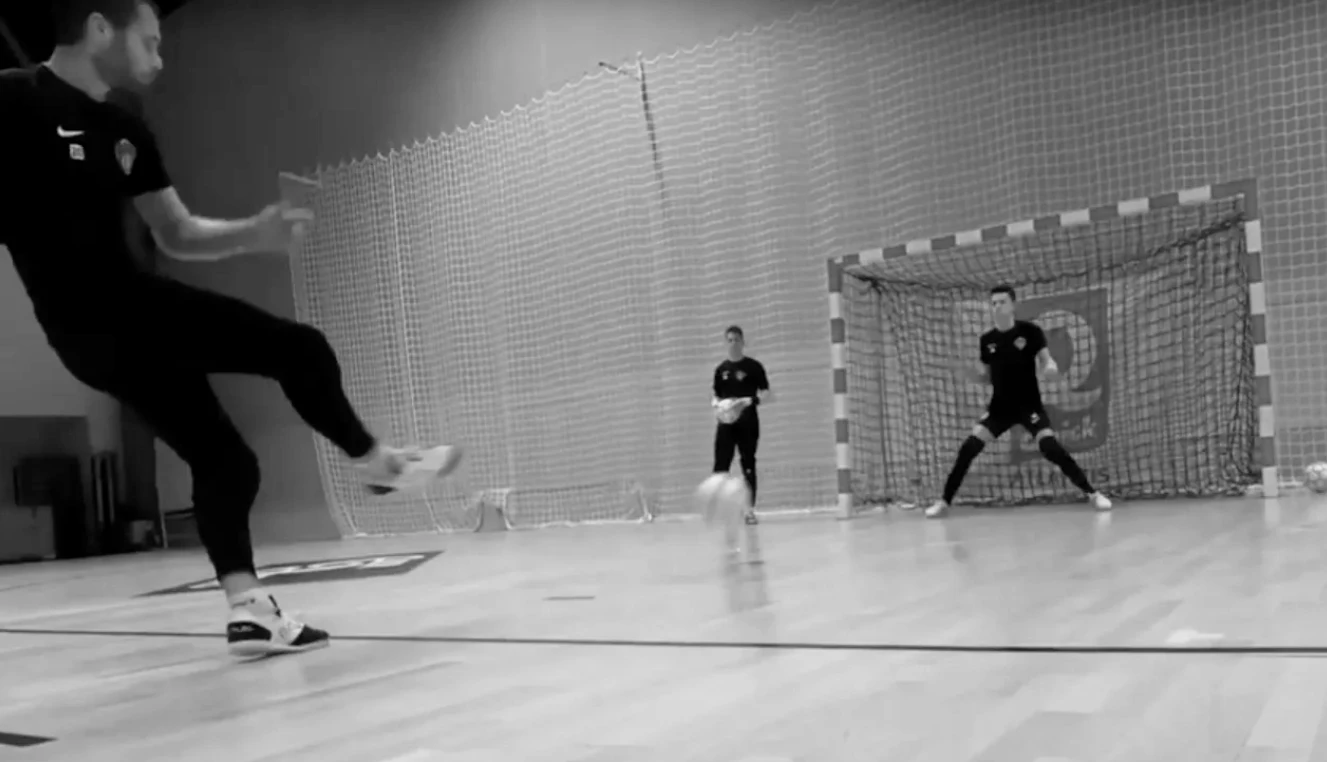
@nabzfootsaltraining Futsal training, 4-0 tactical drill #futsal #futsalindonesia #futsalplayer #training
♬ original sound – Nabz Footsal Training
The 2-2 system: stability in two blocks
Also called “the square”, this system splits the team into two more defensive players and two more attacking players. Read our full guide to the 2-2 system.
- Advantages: it is simple to understand and set up, which makes it ideal for beginner teams. It offers great defensive solidity and well-defined roles.
- Drawbacks: it can lack fluidity and leave a big gap between the defensive and attacking blocks, which makes build-up play harder. It is often seen as less dynamic than other systems.
- Ideal for: teams that are still learning, youth categories, or as a solid defensive base for counter-attacking.
Formations compared
| Feature | 3-1 system | 4-0 system | 2-2 system |
|---|---|---|---|
| Complexity | Medium | High | Low |
| Main advantage | Balance / reference point | Movement / creating space | Simplicity / solidity |
| Player profile | Needs a good pivot | Versatile, intelligent players | Well-defined roles |
| Defensive risk | Moderate | High if poorly executed | Low |
The essential futsal tactics for winning
A formation is an empty shell without the futsal tactics that bring it to life. In attack or in defence, the principles of play are what make the difference.
Attacking strategies
- Playing through the pivot: use the pivot not only to score but also as a lay-off point for wingers arriving at speed.
- Rotations (rodízio): the heart of the 4-0. Coordinated movements in which players swap positions to disrupt the opposing defence and open gaps.
- Counter-attacks: the switch from defence to attack is a key moment. Winning the ball and reaching the opponent’s goal in 2 or 3 passes is a formidable weapon.
- Playing 5 v 4 (flying goalkeeper): when you are behind late in the match, bringing your goalkeeper up into attack creates a numerical advantage. It is a high-risk tactic, but it can pay off with an equaliser. See our guide to the power play.
Defensive strategies
- Zonal defence: each player is responsible for an area of the court. The aim is to stay compact, close the spaces and force the opponent to shoot from distance.
- Man-to-man defence: each player tightly marks one opponent. It is an aggressive defence designed to stop the opponent developing their game.
- High pressing: going after the opponent high up in their own half to stop them playing out cleanly and to try to win the ball near their goal. This strategy is very effective but demands great coordination, even when pressing while outnumbered (FR).
- Managing fouls: in futsal, from the 6th team foul in a half, the opponent gets a shot with no wall from 10 metres. Knowing how to defend without fouling is a crucial tactical skill. A good grasp of the rules on accumulated fouls is essential.
Which futsal formation should your team play?
Choosing the ideal formation is not an exact science. It depends on many factors. This interactive tool is designed to help you find the system that best suits your team’s profile. Answer these few questions to get a personalised recommendation.
Which formation suits your team? 🤔
Advantages:
Watch out for:
Putting it into practice: how to train formations and tactics
Theory is good. Practice is better. For a team to absorb a formation, it has to be worked on in training through specific drills.
- For the 3-1 system: work on circuits where the wingers pass into the pivot, who must lay the ball back first time into their run. Set up 2v1 + pivot situations to work on drawing defenders.
- For the 4-0 system: “pass and follow” drills are the foundation. Create rotation circuits (parallel, diagonal) without the ball, then with it. Use small-sided possession games to improve scanning and passing quality.
- For defending: use “wave” drills (4 defenders against 2, then 3, then 4 attackers) to work on communication and how the defensive block shifts.
“Futsal is 90% head and 10% legs.”
This quote, though unattributed, sums up the essence of the game perfectly. Vision, anticipation and communication are the skills that turn a good player into an exceptional futsal player, able to read and influence the game. Players such as Souheil Mouhoudine, captain of the France national team (FR), embody this tactical intelligence.
FAQ: frequently asked questions
1. What is the best futsal formation for beginners?
The 2-2 system is generally recommended for beginners. Its simple structure with well-defined roles (two defenders, two attackers) lets players learn the basics of positioning and responsibilities without being overwhelmed by complex rotations.
2. How do you counter a team that plays 4-0?
Countering a 4-0 takes discipline. One option is high, coordinated pressing to stop the first pass. Another is a very compact zonal defence that forces them to shoot from distance, aggressively cutting the passing lanes into the middle. The key is to disrupt their rhythm and communication.
3. Can the goalkeeper score in futsal?
Yes, absolutely. The goalkeeper can cross the halfway line and shoot at goal. They can also score directly from a throw or clearance. Their attacking role is often used late in matches (5 v 4) to create an extra player.
4. What is the most common tactical mistake in futsal?
One of the most costly mistakes is losing the ball in the middle of the court in your own half. It gives the opponent a direct counter-attack, often a 1v1 against the goalkeeper. The golden rule: play safe passes through the middle and take more risks out wide.
5. How long does it take to master a new tactic?
There is no single answer. It depends on the players’ level, the complexity of the tactic and how often the team trains. The key is repetition. It takes several weeks, even several months, for a new formation and its patterns of play to become second nature.
Conclusion: from strategy to victory
As you will have gathered, futsal formations and futsal tactics are much more than diagrams on a whiteboard. They are a team’s shared language, the master plan behind every run, every pass and every decision. Whether you choose the balance of the 3-1, the fluidity of the 4-0 or the solidity of the 2-2, success will depend on your team’s ability to understand, communicate and carry out the game plan with discipline and intelligence.
Your next step?
- Analyse your team: identify its strengths and weaknesses to choose the most suitable formation.
- Start simple: pick one system and work on it relentlessly in training before trying to master everything.
- Be a student of the game: watch top-level matches, such as those of Étoile Lavalloise, French champions (FR), Benfica, Portuguese champions (FR), or Meta Catania in Italy (FR), to break down their tactical approaches.
Futsal is a constantly evolving sport. The strategies that work today may be outdated tomorrow. By staying curious, working hard and playing smart, you give yourself every chance of success. To keep learning, explore our futsal guide, where we break down the tactics of the game in detail.