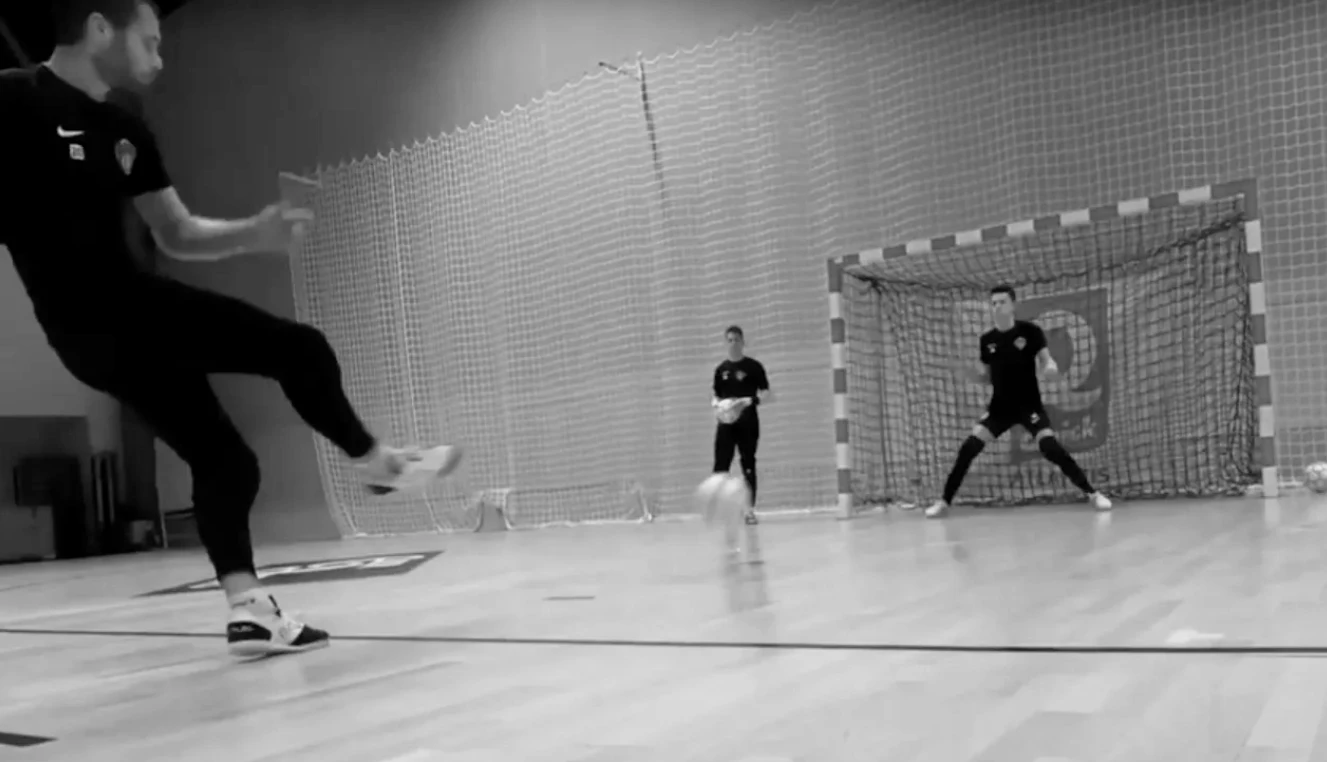

Substitutions in futsal: unlimited changes, endless tactics
Players come on and off as often as the coach wants, without stopping play. How rolling substitutions work in futsal, the rules to respect and how coaches turn them into a tactical weapon.
In this article · 8 chapters
- The fundamental substitution rules in futsal: a unique tactical freedom
- Why unlimited substitutions transform futsal
- Strategies and tips to master the art of substitution
- The impact of substitutions on specific phases of play
- Real cases and examples from professional futsal
- Test your knowledge of futsal substitutions!
- Frequently asked questions (FAQ) ❓
- Conclusion: substitutions, the tactical lungs of futsal 🧠
Futsal is a dynamic, fast and incredibly tactical sport. If you have ever watched a match, you will have noticed the constant ballet of players coming on and off without play stopping. This feature, unlimited rolling substitutions, is one of the cornerstones that set futsal apart from traditional football and deeply shapes its identity. Understanding the futsal substitution rules is not just a matter of compliance: it is the key to a world of strategies and tactical opportunities.
The fundamental substitution rules in futsal: a unique tactical freedom
With its small court and frantic pace, futsal demands extraordinary endurance and concentration from players. That is where the substitution rules come in, offering a breath of fresh air and unmatched tactical flexibility.
The specific nature of “rolling substitutions” ✈️
Unlike football, where substitutions are limited and require a stoppage, futsal allows rolling (“flying”) substitutions. Players can be replaced at any moment of the match, even while the ball is in play, without the referee stopping the action.
For these substitutions to go smoothly, strict rules govern how they are made:
- Substitution zone: each team has its own substitution zone in front of its bench. It is the only authorised way on and off the court. Think of it as a pit lane in Formula 1!
- Order of the change: the player leaving must have completely left the court through their substitution zone before the substitute can enter. A team may never have more than five players on the court (four outfield players plus a goalkeeper).
- Kit: the substitute must wear the same shirt as their team. The player who comes off can return later, which is fundamental to rotation strategies.
“Rolling substitutions are the beating heart of futsal. They set the tempo, shape strategies and make every second of the match unpredictable.” – An internationally renowned futsal coach.
The roles of the incoming and outgoing player 🤝
Understanding each player’s role during a substitution is crucial:
- The outgoing player: their aim is to leave the court as quickly as possible through the substitution zone, without interfering with play. They must make way before their team-mate comes on.
- The incoming player: they may only enter the court once their team-mate has completely crossed the touchline. Their sharpness is essential to keep play flowing and not unbalance the team.
Sanctions for breaking the rules 🚨
Breaking these rules can lead to sanctions:
- Yellow card: if a player enters the court before their team-mate has left, or comes on or off outside the substitution zone, the referee may caution them.
- Indirect free kick: play is stopped and an indirect free kick is awarded to the opposing team where the offence occurred.
- Advantage: the referee can play advantage if the opposing team benefits from the situation, but the offence will still be dealt with.
These rules, simple as they seem, are the pillar of futsal’s unique dynamic. They encourage quick execution and discipline while offering unprecedented tactical freedom.
Why unlimited substitutions transform futsal
Unlimited substitutions are much more than a rule: they redefine the very essence of futsal. They are the reason the sport is so intense, unpredictable and demanding.
Higher intensity 🔥
Futsal is a sport of short sprints, sudden changes of direction and intense efforts. Without frequent substitutions, fatigue would soar and the quality of play would drop.
- Fresh legs at all times: coaches can rotate their squad every 1 to 3 minutes, so the players on the court are always at their physical peak. This allows constant pressure on the opponent and the ability to repeat efforts.
- Injury prevention: by managing each player’s workload, substitutions help reduce the risk of fatigue-related injuries. See our guide to preventing futsal injuries.
- Keeping the tempo: the game never slows down. As soon as a player shows signs of fatigue, a fresh team-mate replaces them.
Endless tactical variety 🤯
This is perhaps the most fascinating aspect of unlimited substitutions. They give coaches an exceptionally rich tactical palette.
- Changing system in real time: a team can switch from a defensive system (e.g. 1-2-1) to a more attacking one (e.g. 2-2) in seconds, simply by replacing a defender with an attacker, or vice versa.
- Specialist roles: some players can be defensive specialists, others attacking specialists, others power play experts. Substitutions let the coach field the best combination for each phase of play.
- Surprise effect: bringing on a player with different qualities (faster, more technical, more physical) can unsettle the opposing defence or energise your own attack.
- Adapting to the opponent: if the opponent changes strategy or one of its key players is struggling, the coach can respond immediately by adjusting their own line-up.
Many coaches, such as Spain’s Jesús Velasco (former coach of FC Barcelona and Inter Movistar), are known for their mastery of rotation management, using substitutions as genuine tactical weapons.
Player development 🌱
Unlimited substitutions also have a positive impact on player development, especially for young talent.
- More playing time: every player in the squad gets the chance to play and express themselves, which is essential for progress and confidence.
- Versatility: players are often asked to play different roles during a match, developing their versatility and adaptability.
- Quick decision-making: coming on and off at any moment forces players to stay alert and make informed decisions under pressure, a key skill in futsal. It helps develop cognitive skills and speed of analysis.
This flexibility is a major asset for futsal clubs, allowing them to build deep, versatile squads.
Strategies and tips to master the art of substitution
Managing substitutions is a science in itself, requiring observation, anticipation and communication. For coaches and players alike, it is an essential skill.
Bench management: a key factor 📊
In futsal, the bench is not a place to rest; it is an observation and preparation post.
- Understanding specific roles: each player on the bench must know exactly what role they will play when they come on. Are they there to defend, attack, press or manage the ball?
- Constant communication: the coach must communicate clearly with the players on the bench, preparing them mentally and physically to come on. Substitutes must stay focused on the match.
- Timing: some coaches use time-based rotations (e.g. every 2–3 minutes), others rotate by phases of play. Sensing the right moment is crucial.
The key moments to make a change ⏱️
Although substitutions are unlimited, some moments are better than others:
- After a goal: whether celebrating or regrouping after conceding, it is a natural moment for a change.
- Before a set piece: a free kick, a corner, a kick from the 6-metre mark… these moments allow specific tactical adjustments (e.g. bringing on a taller player to defend a corner).
- Managing fatigue: at the first sign of a player’s intensity dropping.
- Changing strategy: to switch from zonal defence to man-marking, or vice versa.
- During a time-out: time-outs are perfect opportunities to reorganise the team and make several changes at once.
@idiiir A referee explains what happened in a match (in French) #futsal #arbitre
♬ original sound – Idiiir
The importance of versatility 🤸
A team of versatile players is a real headache for the opponent.
- Tactical flexibility: players who can play several positions (defender, pivot, winger) greatly increase the coach’s options.
- Quick adaptation: in case of injury or a card, a team of versatile players can adapt without losing quality.
Table: futsal vs football substitutions
| Feature | Futsal | Football |
|---|---|---|
| Number of substitutions | Unlimited | Limited (usually 3 to 5 in official matches) |
| When | At any time (in play, “rolling”) | Only when play is stopped |
| Where | A specific, marked zone | At the halfway line |
| Substituted player | Can come back on | Cannot come back on |
| Tactical impact | Very high, constant rotations | Moderate, occasional adjustments |
| Intensity | Maximal and sustained | Varies with players’ fatigue |
The impact of substitutions on specific phases of play
Substitutions are not just about “fresh legs”; they are strategic tools that directly influence every phase of the game.
Attack and defence 🛡️⚔️
Being able to change players on the fly allows immediate adjustments to attacking or defensive needs.
- To attack: a coach can bring on more creative players or finishers for attacking phases, looking to break through the opposing defence. They can also choose intense pressers to win the ball high up the court.
- To defend: against sustained opposing pressure, it is common to bring on sturdier defenders or players known for intercepting and blocking shots.
- Quick transitions: substitutions make fast switches between defence and attack easier, by changing the profiles of the players on the court in the blink of an eye.
Power play situations 🌟
The power play is an advanced futsal tactic in which the goalkeeper is replaced by an extra outfield player to create a numerical advantage in attack, often late in the match to try to equalise or take the lead. See our analysis of the power play.
- Replacing the goalkeeper: the most spectacular substitution. The goalkeeper comes off and a fifth outfield player, often very technical and a good passer, comes on.
- The importance of rotations: in a power play, rotations are even more crucial to keep the ball and create space, because the team is more exposed to counter-attacks.
- Specific training: professional teams train specifically for these phases, and smooth substitutions are essential to their success.
To learn more about the goalkeeper’s specific role, see our article on why futsal goalkeepers do not wear gloves, which covers some aspects of their versatility.
Managing fouls and cards ⚠️
Substitutions are also a risk-management tool.
- Protecting a booked player: if a player already has a yellow card, the coach may take them off for a while to avoid a second caution and a sending-off. They can come back later if needed.
- Avoiding accumulated fouls: in futsal, accumulated fouls are punished with direct free kicks from the sixth foul. Rotating players spreads the defensive load and limits the number of fouls per player. See our guide to accumulated fouls.
Real cases and examples from professional futsal
Theory is good, practice is even better! Let us look at how the biggest futsal teams use these rules to their advantage.
Étoile Lavalloise Futsal: a model of squad management 🇫🇷
In France, clubs such as Étoile Lavalloise Futsal have shown how important effective squad and rotation management is to reach the top. Their success in the French championship is partly due to their ability to keep the intensity constant and adapt to every opponent through smart use of the bench. Their 2024-25 season review (FR) highlights this strength in depth.
The European giants and their strategies 🇪🇺
Europe’s leading futsal clubs are masters of the art of substitution.
- Benfica and Sporting (Portugal): in their intense finals, such as when Benfica won the 2025 title against Sporting (FR), the rotations are almost automatic, keeping up constant pressure and never letting the opponent breathe. Managing effort over 40 minutes is one of the keys to their dominance.
- Jimbee Cartagena (Spain): in the Spanish league, teams such as Jimbee Cartagena, Spanish champions in 2025 (FR), excel at tactical variation through substitutions. They can alternate between possession phases and direct play simply by changing the profiles of the players on the court. Their ability to stage comebacks, as when they finished second in the league (FR) the year before, is often linked to this flexibility.
Italy and the strategy of rotation 🇮🇹
The Italian championship is another excellent example of the strategic use of substitutions. Teams such as Meta Catania, Italian champions for the second time (FR), or the Scudetto final between Meta Catania and Napoli (FR), show how clever rotation management can make the difference in high-intensity matches. Strength in depth and every player’s ability to contribute are major assets.
Test your knowledge of futsal substitutions!
Frequently asked questions (FAQ) ❓
Q1: Is there a limit to how many times a player can be substituted and come back on?
No, in futsal substitutions are unlimited. A player can be replaced and come back on as many times as the coach sees fit, provided the rules on the substitution zone and the order of exit and entry are respected.
Q2: What is the main difference between substitutions in futsal and in 11-a-side football?
The main difference is that futsal substitutions are rolling and unlimited: they are made without stopping play and players can come back on. In 11-a-side football, substitutions are limited in number (usually 3 to 5), require a stoppage, and a substituted player cannot return.
Q3: Can the goalkeeper be changed during the match?
Yes, the goalkeeper can be replaced by an outfield player (who then becomes the new goalkeeper) or by a designated substitute goalkeeper. This follows the same rules as other rolling substitutions, but the new goalkeeper must wear a distinctive shirt. It is essential to the power play tactic, in which an outfield player replaces the goalkeeper to create an attacking numerical advantage.
Q4: Are there times when substitutions are not allowed?
Substitutions are generally allowed at any time, even when the ball is in play. However, it is crucial to respect the substitution zone and the order of exit and entry to avoid sanctions. Referees watch these aspects closely to ensure safety and the flow of play.
Q5: How do substitutions affect futsal players’ fitness?
Unlimited substitutions let coaches rotate their squad very often. This helps keep the intensity high throughout the match, because tired players can quickly be replaced by fresh team-mates. It also reduces the risk of fatigue-related injuries and lets players give their maximum over short periods.
Conclusion: substitutions, the tactical lungs of futsal 🧠
The substitution rules in futsal are much more than a formality; they are the beating heart of the sport, giving it its unique dynamism and endless tactical possibilities. From managing physical intensity to carrying out complex strategies, mastering rolling substitutions is an essential skill for any player, coach or fan who wants to understand futsal in depth.
At MEDIA FUTSAL, we believe that a thorough knowledge of the rules is the first step towards excellence. These seemingly simple rules are the source of the tactical richness that makes futsal so captivating. Whether you are a beginner learning the basics, a coach sharpening your strategies or a fan who wants to appreciate every detail, substitutions are a subject worth exploring.
Keep exploring the fascinating world of futsal in our futsal guide, with in-depth analysis and complete guides to the rules and strategies of the game.