FIFA and UEFA rankings of national futsal teams: analysis and trends
Brazil on top, Morocco in the top 6, Armenia climbing fast: what the FIFA and UEFA futsal rankings showed in 2025, how they are calculated and how a team can move up.
In this article · 10 chapters
- The FIFA ranking of national futsal teams
- The UEFA ranking of national futsal teams
- 🏆 Ranking impact simulator
- How the FIFA and UEFA rankings are calculated
- Trends: the big changes
- How major competitions affect the rankings
- Outlook and challenges for the future of futsal
- How national teams can climb the rankings
- Frequently asked questions
- Conclusion
Futsal is growing spectacularly worldwide, and the FIFA and UEFA rankings of national futsal teams reveal fascinating shifts in the international pecking order. With Brazil still on top of the FIFA men’s ranking and emerging nations such as Armenia making remarkable progress, 2025 marked a turning point in the evolution of this dynamic sport.
Note: the figures below are a snapshot of the rankings published in April 2025. They change after every international window: check FIFA and UEFA for the latest positions. Since then, Spain have won UEFA Futsal EURO 2026, beating Portugal 5-3 in the final.
The FIFA ranking of national futsal teams
FIFA men’s ranking: the world leaders
The FIFA men’s futsal ranking updated on 4 April 2025 showed a fascinating world hierarchy:
| Rank | Team | Points | Trend |
|---|---|---|---|
| 1 | 🇧🇷 Brazil | 1655.54 | Stable |
| 2 | 🇵🇹 Portugal | 1549.51 | ↗️ |
| 3 | 🇪🇸 Spain | 1530.82 | ↗️ |
| 4 | 🇦🇷 Argentina | 1518.65 | ↘️ |
| 5 | 🇮🇷 Iran | 1488.67 | Stable |
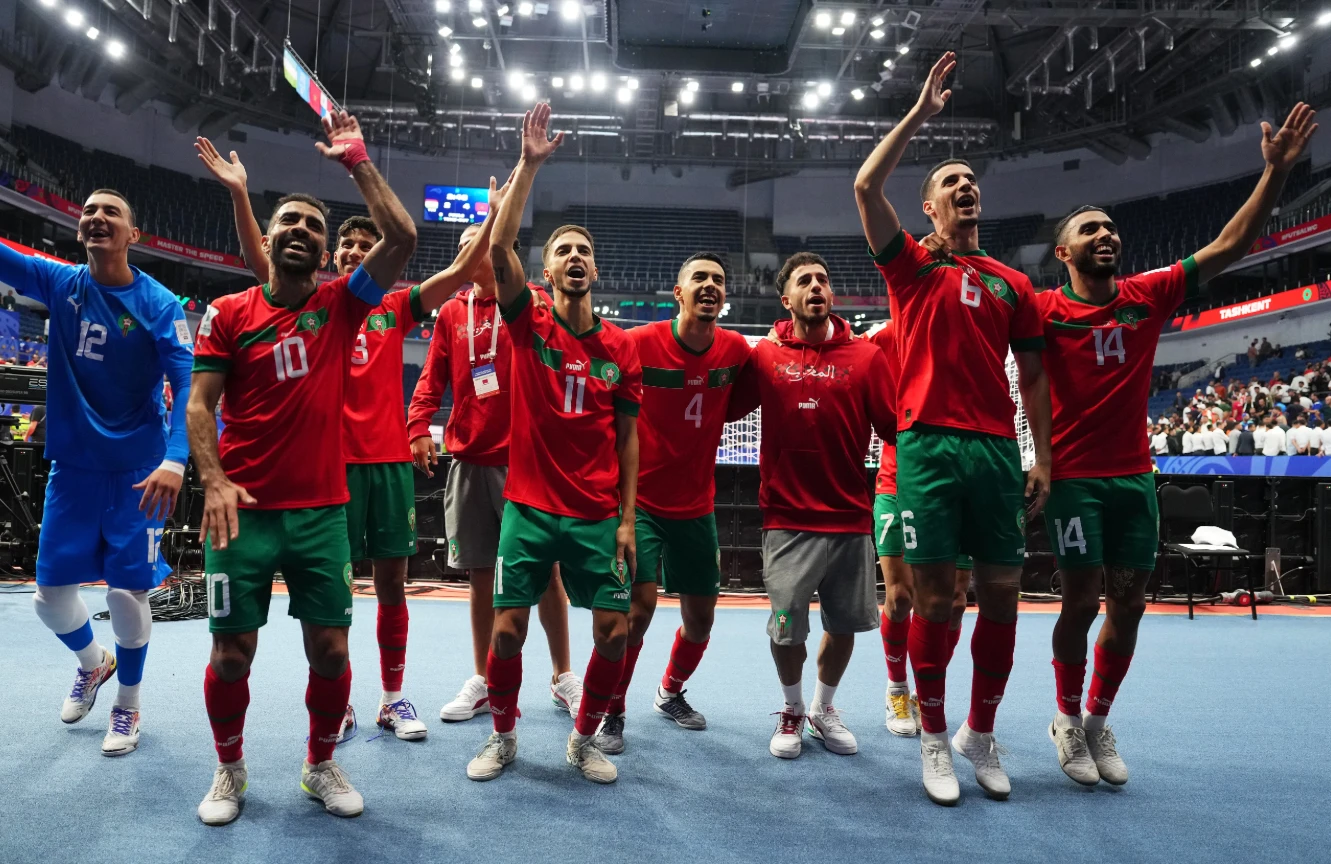
| 6 | 🇲🇦 Morocco | 1468.4 | ↗️ |
| 7 | 🇰🇿 Kazakhstan | 1439.09 | ↘️ |
| 8 | 🇷🇺 Russia | 1409.11 | Stable |
| 9 | 🇺🇦 Ukraine | 1399.12 | Stable |
| 10 | 🇫🇷 France | 1394.52 | Stable |
Remarkable climbers
Armenia jumped 11 places to reach 20th with 1,197.87 points. This historic progress came notably from a key win against Kazakhstan in qualifying for EURO 2026. Read also our article on Morocco’s rise in the FIFA ranking.
FIFA women’s ranking: a new landscape
The FIFA women’s futsal ranking shows impressive geographical diversity:
- 🇧🇷 Brazil – undisputed leaders
- 🇪🇸 Spain – a rising European force
- 🇵🇹 Portugal – European consistency
- 🇦🇷 Argentina – a South American power
- 🇹🇭 Thailand – Asia’s revelation
Thailand in the top 5 illustrates the global expansion of women’s futsal and the emergence of new competitive nations.
The UEFA ranking of national futsal teams
European hierarchy: Portugal and Spain on top
The UEFA futsal ranking updated on 16 April 2025 confirmed Iberian dominance:
| Rank | Team | Coefficient | Note |
|---|---|---|---|
| 1 | 🇵🇹 Portugal | 2945.674 | 👑 EURO 2022 champions |
| 2 | 🇪🇸 Spain | 2639.875 | EURO 2026 champions since |
| 3 | 🇷🇺 Russia | 2547.128 | 🥈 EURO 2022 finalists |
| 4 | 🇰🇿 Kazakhstan | 2456.651 | European consistency |
| 5 | 🇺🇦 Ukraine | 2344.186 | 3rd at the 2024 World Cup |
| 13 | 🇦🇲 Armenia | 1828.210 | ⬆️ Spectacular progress |
How results in competitions matter
The formations and strategies used by these leading teams show how important technical and tactical preparation is to producing convincing results.
🏆 Ranking impact simulator
This simulator uses a simplified Elo formula to illustrate the principle; the official calculations are more detailed.
How the FIFA and UEFA rankings are calculated
The FIFA Elo system: precision and dynamism
The FIFA method for ranking national futsal teams is based on an Elo system that takes into account:
Key factors:
- The relative strength of the opponents 📊
- The importance of the match (a coefficient that increases with the stakes)
- The actual result versus the expected result ⚖️
- Performance history
Importance coefficients used in our simulator:
- Friendlies: K = 20
- Continental qualifiers: K = 30
- Continental finals: K = 40
- World Cup qualifiers: K = 50
- FIFA World Cup: K = 60 (maximum impact)
The UEFA algorithm: a focus on official competition
UEFA uses its own method for its futsal ranking, which stands out by:
- Excluding friendlies (only official competitions count)
- Importance factors that vary with the stage of the tournament
- A protection threshold in final tournaments
- An inactivity rule for teams that stop playing official matches
A careful post-match review (FR) helps understand the impact of each match on these rankings.
Trends: the big changes
Spectacular progress
Armenia: a historic rise
- Up 11 places in the FIFA ranking
- 13th in UEFA’s ranking (a significant improvement)
- A landmark 4-2 win against Kazakhstan in EURO 2026 qualifying
Stability at the top
Brazil stayed on top thanks to:
- The 2024 World Cup title 🏆
- Consistent results in the Copa América
- The continuous development of its domestic futsal
- Recognised technical and tactical excellence
How major competitions affect the rankings
The 2024 FIFA Futsal World Cup: lasting effects
The results of the last World Cup strongly influenced the FIFA futsal ranking:
| Final position | Team | Impact on ranking | Change |
|---|---|---|---|
| 🥇 Champions | Brazil | Consolidation | Kept 1st place |
| 🥈 Runners-up | Argentina | Progress | Stayed in the top 5 |
| 🥉 Third | Ukraine | Improvement | Stable in the top 10 |
| Fourth | France | Confirmation | Stayed in the top 10 |
UEFA Futsal EURO 2022: continuing effects
Results at EURO 2022, won by Portugal against Russia in the final, continued to shape the UEFA ranking in 2025, before EURO 2026 reshuffled the cards with Spain’s title.
Outlook and challenges for the future of futsal
Towards the 2028 World Cup
The FIFA and UEFA rankings will play a decisive role in the draws and qualification process (FR) for the next World Cup. Follow the European qualifiers.
What is at stake:
- Seeding for the draws
- Geographical distribution of qualifying places
- Media attention and potential sponsors
- Development of national infrastructure
The emergence of new powers
The rankings reveal several promising trends:
- Africa: Morocco in the world top 6
- Asia: Iran stable, Thailand emerging (women)
- Eastern Europe: Armenia’s remarkable progress
- South America: continued Brazil–Argentina dominance
How national teams can climb the rankings
Optimising performance
To improve their position, teams can focus on:
- Playing more official competitions
- Tactical preparation (see our guide to futsal formations)
- Managing substitutions according to the specific rules
- Mastering rules such as the 4-second rule
Long-term development
National federations must also consider:
- Coach education in modern tactics
- Developing domestic leagues
- Investing in infrastructure
- Talent identification programmes
Frequently asked questions
How are FIFA futsal points calculated?
The FIFA system uses an Elo algorithm that adds or removes points according to:
- The result (win, draw or defeat)
- The relative strength of the opponent
- The importance of the match
- The difference between the expected and actual result
What is the difference between the FIFA and UEFA rankings?
FIFA: includes all recognised international matches, friendlies included.
UEFA: only official competitions count (EURO, World Cup and their qualifiers).
How often are the rankings updated?
Both are updated regularly after international windows. The figures in this article date from April 2025 (FIFA: 4 April; UEFA: 16 April).
How can a team climb quickly?
- Beat better-ranked teams
- Perform well in important official competitions
- Be consistent
- Take an active part in continental qualifiers
What impact do rankings have on draws?
- They decide the seeds for the groups
- They help balance the geographical distribution
- They shape potential match-ups in final tournaments
Conclusion
The FIFA and UEFA rankings of national futsal teams reveal a constantly evolving landscape, marked by the persistence of traditional powers and the promising emergence of new competitive nations.
Brazil kept its world supremacy with 1,655.54 points, while Armenia wrote a historic page by climbing to 20th in the FIFA ranking and 13th in UEFA’s. This shows how modern tactics and rigorous preparation can transform a national team’s destiny.
To follow the national teams, see our competitions section and explore our futsal guide.