
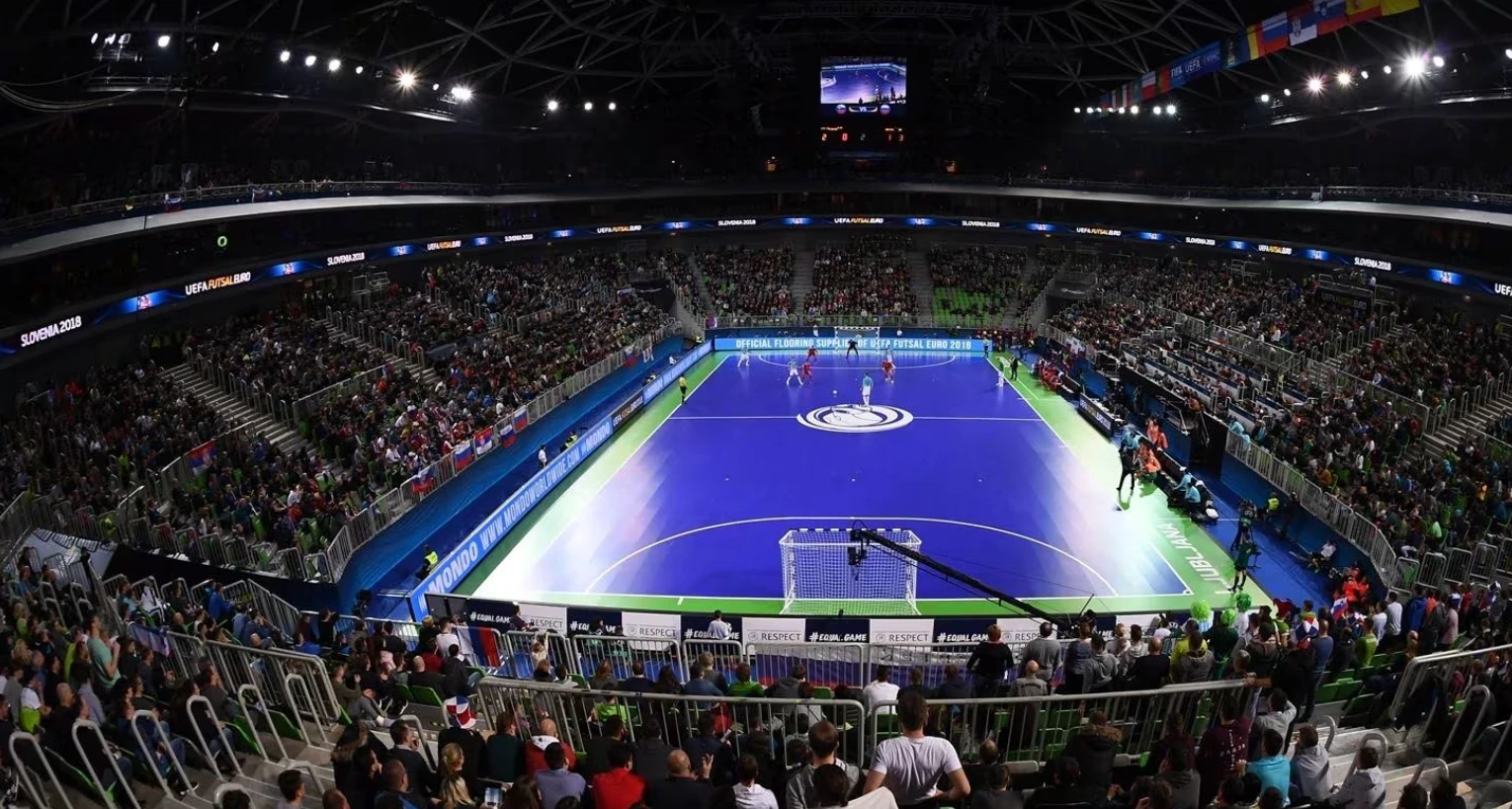
The UEFA Futsal EURO: the complete guide to the European Championship
From Spain's first title in 1996 to their eighth in 2026: the history, format and roll of honour of the UEFA Futsal EURO, and what happened at EURO 2026.
In this article · 8 chapters
- History and evolution of the European Futsal Championship
- The Futsal EURO format
- Roll of honour and key figures
- EURO 2026: what happened
- Legendary players and moments
- Impact on the development of futsal in Europe
- The challenges of the modern Futsal EURO
- Conclusion: the Futsal EURO, a showcase of European excellence
Imagine a sport in which every second counts, where comebacks are commonplace and Europe’s great nations go head to head on a 40-metre court. Welcome to the electrifying world of the UEFA Futsal EURO, the most prestigious continental competition in this fast-growing sport.
The Futsal EURO is much more than a tournament: it is the stage on which future world stars emerge and European futsal legends are made. Since it began in 1996, the competition has produced epic rivalries, unforgettable performances and moments that have marked the history of European sport.
The 2026 edition, co-hosted by Latvia, Lithuania and Slovenia, saw Spain win an eighth European title by beating Portugal 5-3 in the final in Ljubljana, while France reached the semi-finals and finished fourth.
History and evolution of the European Futsal Championship
Promising beginnings (1996–2003)
The UEFA European Futsal Championship began in 1996 in Spain, a crucial step in UEFA’s official recognition of futsal. That first edition, won by Spain, laid the foundations of a competition that would transform the European futsal landscape.
The early years were marked by strong Spanish dominance, challenged by Russia, champions in 1999, and by Ukraine, beaten finalists in 2001 and 2003. The styles of play developed then still influence the tactical evolution of world futsal today.
Expansion and professionalisation (2003–2012)
The period from 2003 to 2012 was a decisive turning point. The number of teams in the final tournament grew from 8 to 12, reflecting the sport’s growing popularity across Europe.
Key moments of this period:
- 2003: Italy’s first title, at home, beating Ukraine in the final
- 2005 to 2012: four consecutive titles for Spain
- 2010: Spain beat Portugal 4-2 in the final in Hungary
- 2012: Spain beat Russia in the final in Croatia
The modern era (2014 to today)
Since 2014, the Futsal EURO has reached full maturity. Italy won a second title in 2014, Spain a seventh in 2016 (7-3 against Russia in Serbia), then Portugal, led by Ricardinho, won back-to-back titles in 2018 and 2022. The final tournament was expanded to 16 teams in 2022, giving new nations the chance to shine.
In 2026, Spain regained the throne ten years after their previous title, ending Portugal’s bid for a third consecutive crown.
The Futsal EURO format
The qualification process
The road to the final tournament begins with a demanding qualification process involving the national teams of almost every UEFA member association. It takes place in several stages:
- Preliminary rounds: the lowest-ranked teams play each other
- Main round: the group stage that decides most of the qualifiers
- Play-offs: for the remaining places
- Automatic qualification: the host country (or countries)
The final tournament
The final tournament brings together 16 teams in a format designed for spectacle and sporting fairness:
Group stage:
- 4 groups of 4 teams
- One round of matches (3 matches per team)
- The top 2 in each group go through
Knockout stage:
- Quarter-finals: 8 teams
- Semi-finals: 4 teams
- Third-place match
- Final: the European champion is crowned
Futsal-specific rules
EURO matches are played under the FIFA Futsal Laws of the Game:
- Duration: 2 halves of 20 minutes (effective time)
- Teams: 5 players per side (goalkeeper + 4 outfield players)
- Substitutions: unlimited and rolling (see our guide to substitutions)
- Ball: a specialised futsal ball with controlled bounce
- Court: 40 m × 20 m at international level
Players’ equipment is particularly important, especially their futsal shoes, which must give perfect grip on indoor surfaces.
Roll of honour and key figures
Winners by edition
| Year | Host | Champion | Runner-up | Final |
|---|---|---|---|---|
| 1996 | Spain | 🇪🇸 Spain | Russia | 5-3 |
| 1999 | Spain | 🇷🇺 Russia | Spain | 3-3 (pens) |
| 2001 | Russia | 🇪🇸 Spain | Ukraine | 2-1 |
| 2003 | Italy | 🇮🇹 Italy | Ukraine | 1-0 |
| 2005 | Czech Republic | 🇪🇸 Spain | Russia | 2-1 |
| 2007 | Portugal | 🇪🇸 Spain | Italy | 3-1 |
| 2010 | Hungary | 🇪🇸 Spain | Portugal | 4-2 |
| 2012 | Croatia | 🇪🇸 Spain | Russia | 3-1 |
| 2014 | Belgium | 🇮🇹 Italy | Russia | 3-1 |
| 2016 | Serbia | 🇪🇸 Spain | Russia | 7-3 |
| 2018 | Slovenia | 🇵🇹 Portugal | Spain | 3-2 |
| 2022 | Netherlands | 🇵🇹 Portugal | Russia | 4-2 |
| 2026 | Latvia, Lithuania, Slovenia | 🇪🇸 Spain | Portugal | 5-3 |
Nation by nation
🥇 Spain – the absolute reference
- 8 titles (1996, 2001, 2005, 2007, 2010, 2012, 2016, 2026)
- The only team to have won four titles in a row (2005 to 2012)
- Back on top in 2026 thanks to a hat-trick in the final from Antonio Pérez, player of the tournament
🥈 Portugal and Italy – two titles each
- Portugal: champions in 2018 and 2022, finalists in 2010 and 2026
- Italy: champions in 2003 (at home) and 2014, finalists in 2007
- Portugal’s rise was driven by exceptional talents such as Ricardinho
🥉 Russia – champions in 1999 and regular finalists
- 1 title, in 1999
- Finalists in 1996, 2005, 2012, 2014, 2016 and 2022
- Excluded from UEFA competitions since 2022
🇫🇷 France reached the semi-finals of EURO 2026 and lost the third-place match to Croatia on penalties (5-5 after extra time), confirming its rise after its 4th place at the 2024 World Cup.
EURO 2026: what happened
Organisation
EURO 2026, the 30th anniversary of the competition, was the first co-hosted Futsal EURO and the first UEFA tournament shared between three countries: Latvia and Lithuania, chosen in December 2023, then Slovenia. Group matches were played in cities such as Riga and Kaunas, and the final on 7 February 2026 at Arena Stožice in Ljubljana.
The podium
- 🥇 Spain: 5-3 winners against Portugal in the final
- 🥈 Portugal: whose bid for a third consecutive title was ended
- 🥉 Croatia: their first-ever European medal, won on penalties against France
- 4th France: the best result in its history at a EURO
Follow the national teams’ road to the next major tournament on our World Cup qualifiers page, updated every Monday.
Legendary players and moments
The legends
Ricardinho (Portugal) – the master
Considered by many to be the best futsal player of all time, Ricardinho left his mark on the EURO with his exceptional creativity and led Portugal to its first European title in 2018.
The Spanish generations
From the first titles of the 1990s to the 2026 triumph, Spain has produced a succession of world-class players and coaches, built on a structured league and youth development system. Read about the history of futsal.
Unforgettable moments
2016 final: Spain’s reconquest
Spain’s 7-3 win against Russia in the 2016 final in Belgrade remains one of the most emphatic finals in the competition’s history.
2018 and 2022: Portugal’s era
Portugal beat Spain after extra time in 2018, then Russia in 2022, to win two titles in a row, and added the 2021 World Cup in between.
2026 final: Spain back on top
Ten years after their seventh title, Spain beat Portugal 5-3 in Ljubljana, with a hat-trick from Antonio Pérez.
Revelations and emerging talent
The Futsal EURO is a springboard for young European talent. It is the stage on which many players announce themselves at the highest international level, before confirming in the big European leagues and in the UEFA Futsal Champions League.
To reach that level, professional-quality equipment is essential. Read our guides to Joma and Munich futsal shoes, brands worn by many elite European players.
Impact on the development of futsal in Europe
A catalyst for growth
The Futsal EURO plays a decisive role in the growth of European futsal. Each edition increases the sport’s visibility, encourages national federations to structure their leagues and attracts new players and spectators.
Youth and women’s competitions
UEFA has extended the EURO model to other categories:
- The UEFA Under-19 Futsal EURO, held since 2019, a springboard to the senior team
- The UEFA Women’s Futsal EURO, also launched in 2019, which accompanies the rapid growth of the women’s game
Accessible equipment plays a key role in opening the sport to everyone. Our guide to Decathlon Kipsta futsal shoes shows that young players can start without a big budget.
Europe on the world stage
The European teams are among the strongest in the world:
- 3 FIFA Futsal World Cup titles for Europe (Spain in 2000 and 2004, Portugal in 2021)
- A strong European tactical influence on world futsal
- European places at the World Cup are decided through UEFA’s own qualifying competition
Innovation in equipment
The European championship has also encouraged innovation in sports equipment. Manufacturers develop technologies specific to futsal, especially for soles and insoles (FR) and the materials used in shoes, as well as new-generation courts, balls with optimised bounce and electronic timing systems.
The challenges of the modern Futsal EURO
Competition with other sports
The Futsal EURO faces growing competition for attention in the European sports calendar. To stand out, it relies on:
- Guaranteed spectacle: intense 40-minute matches
- Accessibility: affordable tickets and friendly arenas
- Innovation: new broadcasting technologies
- Stars: showcasing charismatic personalities
Sustainability and responsibility
Like all UEFA tournaments, the EURO now pays particular attention to environmental sustainability: travel, venues and awareness campaigns.
Equality and inclusion
UEFA aims to make the Futsal EURO a model of inclusion and equality, with the development of the women’s game, accessibility for people with disabilities and the fight against all forms of discrimination.
Conclusion: the Futsal EURO, a showcase of European excellence
From its modest beginnings in 1996 to Spain’s eighth title in 2026, the Futsal EURO has become much more than a championship: it is a symbol of European sporting excellence and a driver of development for millions of fans across the continent.
With 16 elite teams and a growing audience, the competition confirms its status as a world reference. Spain’s supremacy, challenged by Portugal, Italy and now nations such as Croatia and France, promises thrilling editions to come.
Next steps for fans
For fans:
- Follow the national teams on UEFA’s platforms and on our World Cup qualifiers page
- Discover the emerging teams and their new talent
For players:
- Get equipped with kit suited to futsal (see our equipment guide)
- Join a local club to live your passion for futsal
For the curious:
- Explore futsal through our futsal guide
- Understand the tactical subtleties of this unique sport
