Why don't futsal goalkeepers wear gloves? Explanations and alternatives
A low-bounce ball, a goalkeeper who plays as a fifth outfield player and throws that need perfect touch: why bare hands are so common in futsal, and when thin gloves make sense.
In this article · 9 chapters
- The futsal ball: a fundamental difference
- The goalkeeper’s broader role: more than a last line of defence
- Ball control and touch: a question of finesse
- Safety and injury prevention: a counter-intuitive view
- History and culture: an established tradition
- Alternatives: when do gloves help?
- The futsal goalkeeper: a complete, specialised athlete
- Frequently asked questions
- Conclusion: a feature that makes futsal stronger
Futsal, a dynamic and technical sport, attracts fans all over the world. Yet one feature often surprises newcomers: many futsal goalkeepers play without gloves. 🤔 It is a common question, and the answer is more complex than mere tradition. In this article we look at the tactical, technical, physical and historical reasons behind this habit. Understanding it means grasping an essential part of futsal’s identity and of the goalkeeper’s very particular role.
The futsal ball: a fundamental difference
To understand why so many futsal goalkeepers do without gloves, start with the main tool of the game: the ball. It is fundamentally different from the one used in 11-a-side football.
The futsal ball’s characteristics
The futsal ball, often called a “low-bounce” ball, is designed for hard surfaces and small spaces:
- Size and weight: an official futsal ball (size 4) is smaller than a football (size 5), but almost as heavy.
- Football (size 5): circumference 68–70 cm, weight 410–450 g.
- Futsal (size 4): circumference 62–64 cm, weight 400–440 g.
- With a similar weight in a smaller ball, the futsal ball is denser.
- Reduced bounce: its most important feature. Dropped from 2 m, it must bounce no higher than 65 cm. That makes it more predictable on hard floors and allows faster, more technical play on the ground. See our guide to the futsal ball.
Impact on catching and saving
- Natural cushioning: thanks to its low bounce and density, the futsal ball tends to “stick” in the hands, making it easier to control without the extra padding of traditional goalkeeper gloves. Padding can even reduce feel and the ability to hold the ball.
- Different shots: futsal shots are sharp and often struck from close range, frequently with the toe or the sole, with a heavier ball that does not fly like a football. A futsal goalkeeper can therefore deal with most shots bare-handed.
- Better grip: bare hands give direct grip on the ball’s surface, for a firmer, safer hold that reduces the risk of spilling it, especially from point-blank shots.
The futsal ball is the bare-handed goalkeeper’s ally: its low bounce turns the hand into a precise control tool rather than a mere shield.
In short, the futsal ball is designed to be handled with finesse. Thick gloves can become an obstacle rather than a help by reducing the sensitivity required.
The goalkeeper’s broader role: more than a last line of defence
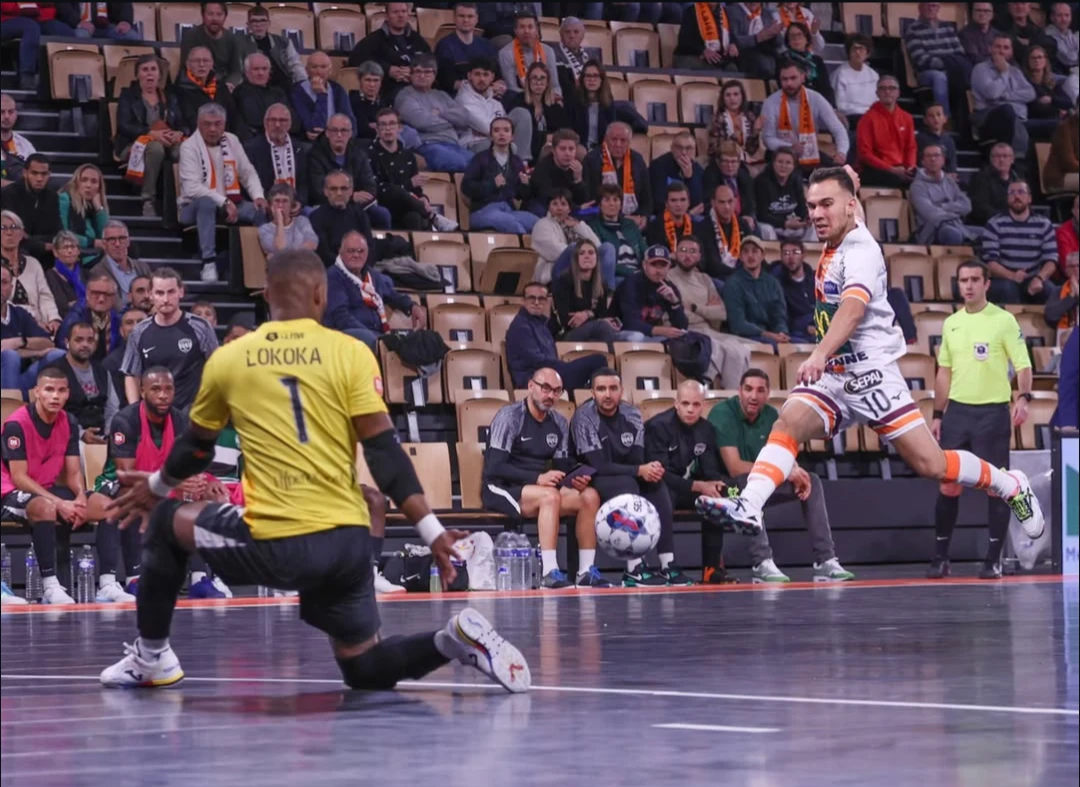
In futsal, the goalkeeper does much more than stop shots. The role is far more integrated into play than in 11-a-side football, and this versatility is a major reason why bare hands are so common.
The “goalkeeper-player”
Futsal is 5 v 5, and every player must be versatile, the goalkeeper included. They are often seen as a fifth outfield player, the “goalkeeper-player” (portero-jugador in Spanish):
- Building play: the goalkeeper is the first passer and is actively involved in building attacks, with the vision to launch quick counter-attacks or join possession to unbalance the opposing defence.
- Footwork is essential: the goalkeeper must be as skilful with the feet as with the hands, taking part in passing, short dribbles and even long-range shots. This is crucial to beat the press or create an overload.
- Quick decisions: in a small space, decisions are made in a fraction of a second: save, throw, pass with the foot or even dribble out of trouble.
Some goalkeepers even act as an extra outfield player in the power play: Leo Higuita was one of the most representative of this profile.
Why touch matters for distribution
- Accurate throws: throws are frequent and must be very accurate to find a team-mate on the run or in a precise space. Bare hands give unmatched feel, letting the goalkeeper judge power and angle perfectly, a bit like a handball playmaker. Top futsal goalkeepers can throw the ball accurately over 20 metres or more.
- Speed of execution: every second counts. Bare hands allow an instant switch from save to distribution.
- Freedom of movement: when the goalkeeper leaves the area to join outfield play, nothing gets in the way of the body’s overall coordination.
The futsal goalkeeper is a conductor who must feel the ball, the game and team-mates. Thick gloves would be a veil over that sensory connection.
The futsal goalkeeper is therefore a complete athlete: defender, attacker and strategist. For more on futsal tactics, see our analyses of the Portuguese play-off finals (FR) or the French D1 Futsal final (FR).
Ball control and touch: a question of finesse
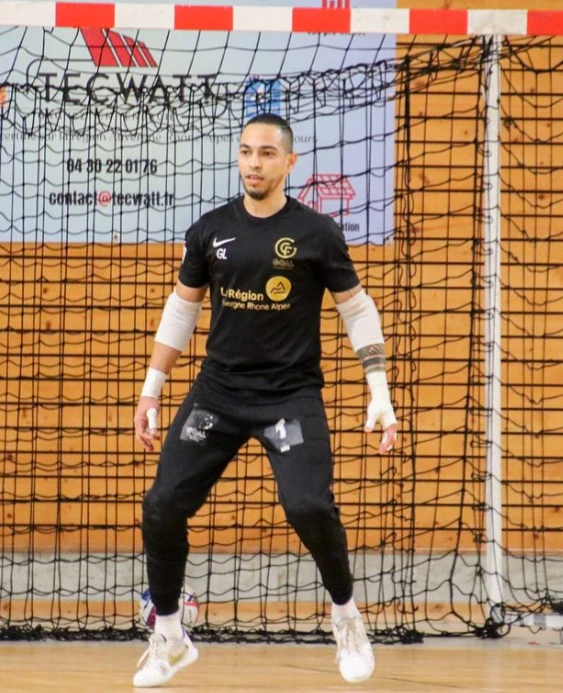
The importance of direct touch
- Grip: skin gives enough natural grip to control the futsal ball. Gloves that do not fit well or have a worn surface can, paradoxically, reduce it.
- Fewer uncontrolled rebounds: one of the goalkeeper’s main aims is not to spill the ball after a save, since a loose ball is an easy chance for the opponent. Bare hands allow better absorption and a safer hold, while stiff, padded gloves can cause more unpredictable rebounds.
- Proprioception: playing bare-handed sharpens proprioception, the awareness of where your body and limbs are in space. The goalkeeper learns to “feel” the ball, anticipate its path and adjust hand position, which helps reflexes and coordination.
Passing and distribution
- Precise passes: whether rolling the ball out to start an attack or throwing long for a counter, bare hands give fine control of trajectory and power.
- Fewer technical errors: bulky gloves can hamper dexterity. In futsal, where space is tight, an error of a few centimetres can be costly.
- Fluidity: the goalkeeper is often under pressure and must act fast. Direct contact with the ball allows quicker, more natural technique.
Safety and injury prevention: a counter-intuitive view
Many people assume gloves protect the hands. In futsal, that perception is often reversed.
Different impacts, more control
- Close-range shots: futsal shots are sharp and precise, but the low-bounce ball and short distances mean the impact on bare hands is generally manageable.
- Reflexes and agility: futsal goalkeepers are trained to have very quick reflexes. They do not just block; they “catch” or parry with technique that reduces the force on the fingers. Many saves are also made with the feet, legs or body.
- Playing surface: hard floors (wood, synthetic) change the nature of falls and dives compared with grass, which is why knee and elbow pads are common.
The risks of unsuitable gloves
- Sprained fingers: 11-a-side gloves are designed to cushion powerful shots from distance. Their thickness and stiffness can restrict natural finger mobility and reduce feel, which can hinder a quick reaction to get the hand out of a bad position.
- Loss of sensitivity: a less secure grip makes spills more likely, which can lead to scrambles in which the goalkeeper ends up among players’ feet.
- Heat and moisture: padded gloves trap heat and sweat in a warm sports hall, making hands clammy inside the glove.
Futsal goalkeepers develop specific strength in the hands and forearms, and a catching technique that allows them to play bare-handed safely.
History and culture: an established tradition
The origins of futsal
Futsal was created in Uruguay in the 1930s by Juan Carlos Ceriani. Equipment was rudimentary and the game was played on basketball courts.
- Simple equipment: from the start, futsal was designed to be accessible and require little equipment. A ball, two goals and a few players were enough, and the emphasis was on footwork and individual technique.
- Influence of handball and basketball: futsal shares similarities with handball (handling, speed, tactics) and basketball (small space, quick passing). In these sports, nobody wears gloves, which may have influenced futsal’s tradition.
The rules and practice today
FIFA took futsal under its wing at the end of the 1980s and standardised the rules. Gloves have never been required.
- Gloves are allowed: the Futsal Laws of the Game do not forbid goalkeepers from wearing gloves; equipment must simply be safe. Goalkeepers who wear them usually choose thin, flexible futsal-specific models. Practice varies from one goalkeeper and one country to another.
- A symbol of futsal: the image of the bare-handed goalkeeper has become emblematic of the sport, symbolising agility, reactivity and technical mastery.
Alternatives: when do gloves help?
Although bare hands are very common, some situations or preferences lead goalkeepers to look for protection or support. These alternatives are very different from classic goalkeeper gloves.
Thin gloves and tape
- Inner gloves: very thin, unpadded or lightly padded gloves, often in Lycra or neoprene. They absorb sweat, can improve grip (for example with silicone dots) and give light protection against abrasion without restricting finger mobility.
- Kinesiology tape or strapping: some goalkeepers tape specific finger or wrist joints, especially after an injury, to stabilise them without losing touch.
- Futsal-specific gloves: some brands make gloves designed for futsal: much thinner, lighter and more flexible than football gloves, with a palm that maximises grip without adding bulk. Some goalkeepers, including at a high level, wear them.
Specific situations and personal preference
- Cold halls: playing in an unheated hall in winter can numb the hands. Thin gloves help keep them warm and sensitive.
- Abrasive floors: some floors are rougher; light protection can prevent grazes when diving.
- Returning from injury: after a minor finger or wrist injury, temporary protection can help a goalkeeper get back to playing.
- Personal preference: ultimately it is a personal choice. A goalkeeper may feel more comfortable or confident with minimal protection, as long as it does not affect performance.
Training for bare hands
- Strengthening hands and fingers: specific exercises improve the ability to absorb shots and handle the ball.
- Catching technique: training focuses on catching the ball in a “cup” or “basket” shape to cushion the impact and secure the ball.
- Reflexes and agility: intensive drills improve visual reflexes and the speed of hand and body movements.
- Gradual adaptation: for young goalkeepers, adapting to bare hands can be gradual. As technique and strength develop, they feel more comfortable without gloves.
For young players starting out, developing proprioception and catching technique matters more than relying on equipment. See also our futsal goalkeeper manual.
The futsal goalkeeper: a complete, specialised athlete
Essential skills
- Agility and reflexes: in such a small space, shots can come from anywhere, at point-blank range. The goalkeeper needs lightning reflexes and exceptional agility.
- Reading the game: like an outfield player, the goalkeeper constantly analyses the situation, anticipates the opponents’ movements and team-mates’ passing options.
- Quick decisions: under pressure, decisions are instant: come out, stay on the line, distribute short or long, play with the feet.
- Footwork and passing: non-negotiable. The goalkeeper is often involved in circulation and must pass accurately with both feet, control high balls and dribble if needed.
- Communication: with a view of the whole court, the goalkeeper must be a vocal leader who organises the defence and warns team-mates of danger.
- Mental strength: stay focused, handle pressure and bounce back quickly from a mistake.
Specific training
- Reflex drills: multiple balls, tennis balls, reactions to light or sound signals.
- Positioning: learning to narrow shooting angles and position according to the situation.
- Intensive footwork: short and long passing, ball control, shooting.
- Game scenarios: situations that simulate real play, including acting as a fifth outfield player.
Iconic goalkeepers
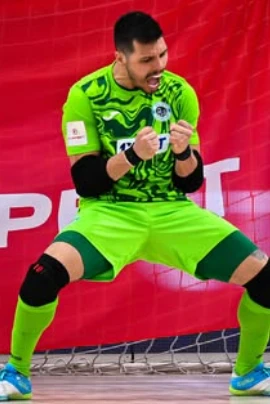
- Leo Higuita (Kazakhstan): the legendary Brazilian-born goalkeeper, naturalised Kazakh, known for his daring forays and his role as an ultra-attacking extra outfield player.
- Paco Sedano (Spain): former FC Barcelona goalkeeper, known for his solidity and accurate footwork.
These examples show that the futsal goalkeeper’s skill set is unique. To follow the big clubs and their goalkeepers, see our articles on the Spanish league final (FR) and the Italian play-offs (FR).
Futsal goalkeeper v 11-a-side goalkeeper
| Feature | Futsal goalkeeper | 11-a-side goalkeeper |
|---|---|---|
| Gloves | Often bare hands (or thin gloves/tape) | Thick, padded gloves |
| Ball | Smaller, relatively heavier, controlled bounce | Larger, livelier, higher bounce |
| Role | Goalkeeper-player, involved in build-up, a fifth player | Mainly the last line of defence, distributing by hand or foot |
| Distribution | Very precise by hand and foot, short and long passes | Long kicks or throws to launch quick attacks |
| Skills | Reflexes, agility, footwork, vision, communication, quick decisions | Saves, diving, dealing with crosses, one-on-ones, clearances |
| Touch | Essential for control and accurate passing | Less critical: cushioning and protection come first |
Frequently asked questions
Do futsal goalkeepers never injure their hands?
Of course they do, like any athlete. But injuries tend to be different: fewer injuries from very powerful long shots, more sprained or dislocated fingers from awkward catches or collisions with players or the floor. Specific training and catching technique reduce these risks.
Can you use ordinary goalkeeper gloves in futsal?
It is not recommended. They are too thick and padded and limit the mobility and feel needed to control a futsal ball. They can also get in the way of footwork and quick distribution. If you want gloves, choose thin futsal-specific ones.
Do the futsal rules forbid gloves?
No. The Futsal Laws of the Game do not forbid goalkeepers from wearing gloves; equipment simply has to be safe. Whether to wear thin gloves or play bare-handed is a personal choice.
How do young goalkeepers learn to play without gloves?
They are encouraged from the start to get used to direct contact with the ball. Training includes hand and finger strengthening, specific catching techniques (such as the “cup” catch) and drills to improve reflexes and hand-eye coordination. Adaptation comes naturally as their technique develops.
What are the advantages of a “goalkeeper-player”?
It gives the team an extra player in build-up, creating an overload that can unbalance the opposing defence. It offers more passing options, helps play out under pressure and lets the goalkeeper launch quick attacks or even score. It is an essential tactic in modern futsal, as seen in the D1 final between Laval and Goal FC (FR).
Conclusion: a feature that makes futsal stronger
The fact that so many futsal goalkeepers play without gloves is not an oddity but a considered adaptation to the sport: the unique futsal ball, the goalkeeper’s broader role as an outfield player, the priority given to touch and precision, and a tradition rooted in simplicity and effectiveness.
At MEDIA FUTSAL, we believe this feature adds to futsal’s beauty and intensity by demanding exceptional technique and agility from its goalkeepers. The position calls for spectacular saves, but also outstanding vision and the ability to be the first link in the attack.
Whether you are an experienced player, a coach, a parent or simply a curious fan, understanding this choice helps you appreciate the richness of the sport. Explore more articles on MEDIA FUTSAL.