Futsal: a great sport for your child?
More touches, quicker decisions, a team that never leaves anyone out: why futsal suits children so well, what parents should know and how to choose the right club.
Children are often looking for a sport that lets them have fun in a group while improving their skills. Many parents wonder whether to sign their child up for futsal. They have questions about the benefits of futsal, what makes the sport different and the equipment needed. Wanting to understand the advantages of futsal often leads families to clubs and associations with a proven track record in youth development. There are plenty of opportunities to play, either recreationally or competitively. Coaches are convinced that this fast-paced discipline nurtures the harmonious development of football skills, and age-appropriate coaching helps young players grow both as athletes and as people. Equipment matters for ball control and injury prevention, so parents and children compare brands when buying kit and shoes. And the many stories of children amazed by their own progress encourage those still hesitating to give futsal for kids a try.
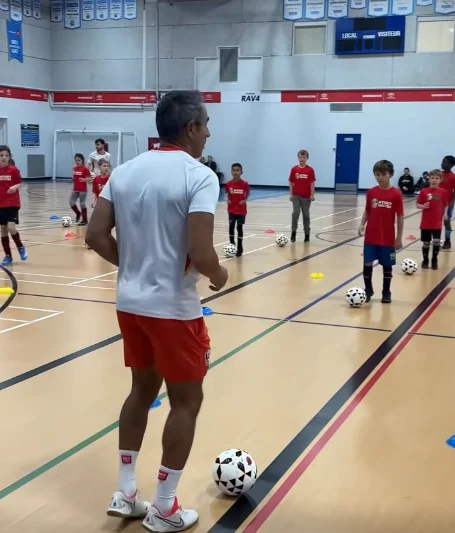
The dynamics of the game grab attention immediately, especially for goalkeepers. Unlike traditional football, the game never freezes. Young players, on the court or in goal, are constantly involved and get many touches of the ball. Some are already inspired by heroes playing in the major leagues, such as the Italian Serie A, one of Europe’s reference championships. The constant movement motivates children and parents to stick with it for the long term.
A dynamic environment with a strong educational role
Clubs with youth sections rely on an environment in which the intensity of play drives every child’s progress. Coaches stress that a young futsal player touches the ball several times a minute, which feeds their reflexes and creativity. The small space does not prevent elaborate play, quite the opposite: footwork improves, passes are short and technique is refined. Many coaches believe the discipline is ideal preparation for 11-a-side football if the child later wants to play outdoors. Read more on how futsal shapes football talent.
The benefits of futsal come up again and again when coaches talk about it. Quick sequences of movements develop agility and coordination. Young players’ visual awareness improves, because they must constantly check where team-mates are and anticipate opponents. Some children choose futsal precisely because they love its explosive format, which shows off their skill on the ball. The accessible court contributes to all-round development, combining technical quality and instant enjoyment.
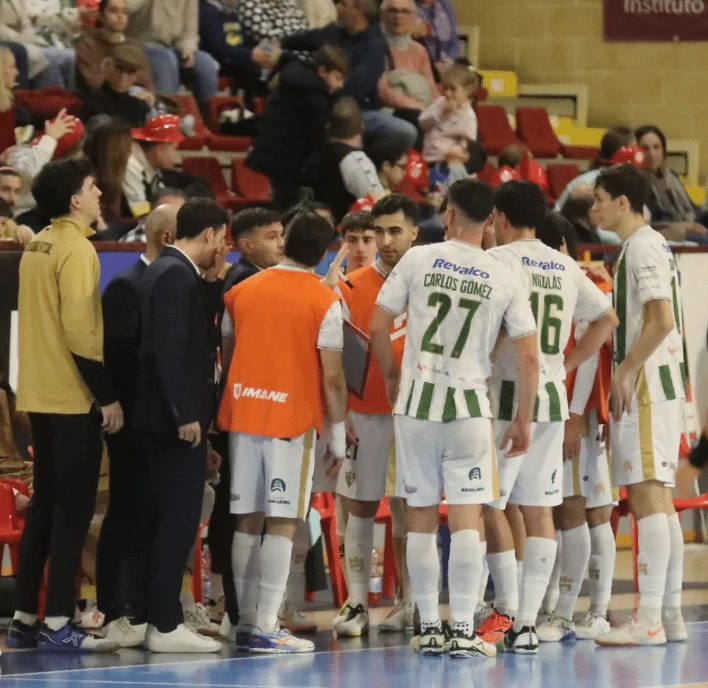
Futsal for children is also a powerful social tool. Children help and motivate each other, string together short passes and discover solidarity in effort. Some parents who were hesitating with a traditional football school are won over by futsal’s liveliness, seeing a way for their child to stay involved rather than isolated on a big pitch. Clubs are growing accordingly, offering recreational sessions for a gentle introduction and more competitive pathways for the boldest.
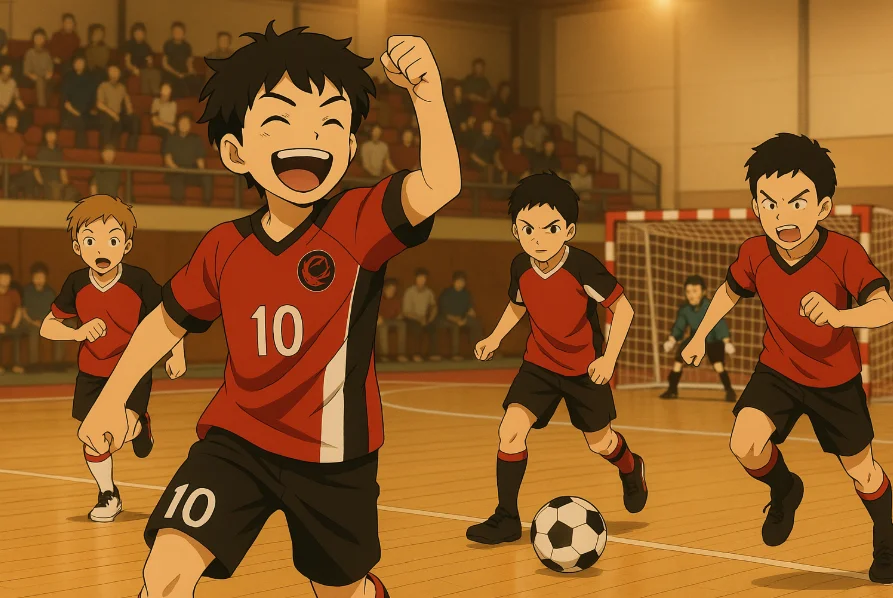
Coaches agree: when a child is having fun, they learn faster. Clubs try to keep that positive momentum. Moments of joy do not always come from scoring: controlling the ball well or laying it off in a dangerous area is already a satisfaction. That constant motivation leads some youngsters to continue their progress in more competitive structures.
Coaching futsal for children puts the emphasis on psychology and teaching. Coaches give precise instructions but never forget the importance of enjoyment. Games focused on reactivity or protecting the ball follow one another, while coaches adjust the intensity to the age group. Technical fundamentals go hand in hand with a good group atmosphere, and clubs that take this open approach often win over families attracted by a modern sport that gets less media attention than traditional football.
The goalkeeper’s role fascinates children. Some, at first reluctant to go in goal, quickly discover that the possibilities are endless: distributing with the feet, quick movements, jumping, diving and joining the attack make them more committed in training. This constant involvement reassures coaches and parents.
Key conditions for a child’s progress
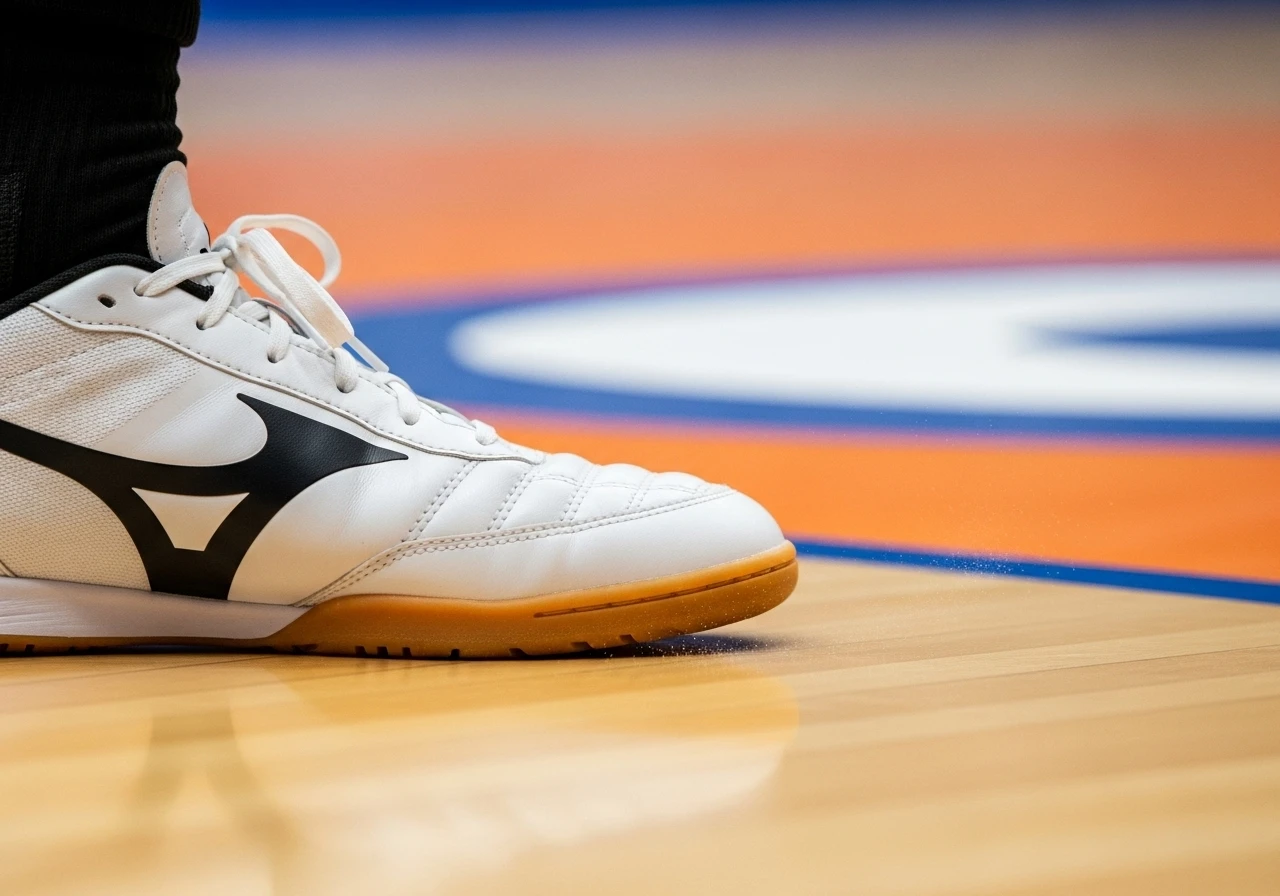
A young player’s development partly depends on the equipment. Futsal halls have smooth floors that encourage technical play. Leading brands such as Nike, Kelme, Joma, Adidas and Puma specialise in shoes that grip the floor perfectly, and parents choose the right equipment as their child grows. Suitable shoes reduce the risk of slipping and improve ball control. See our guide to choosing futsal shoes.
The tactical side matters too. Coaches encourage tactical awareness to develop game intelligence: tracking back depends on reading the situation instantly, and children learn to communicate to cover the court. Sessions include small-sided games to sharpen first touch and passing quality.
Increasingly intense sessions generate enthusiasm. The more a child touches the ball, the better they understand what to improve. Traditional skills (passing, dribbling, shooting) combine with quick transitions, which are essential in futsal.
Regularity is key. By repeating precise movements every week, the child finds a rhythm, progress builds up and motivation grows. Team cohesion develops, and children support each other in the small challenges organised during sessions.
Clubs also showcase the famous power play, in which the goalkeeper temporarily becomes an outfield player. This playful idea intrigues youngsters and shows that every player can occupy different positions, which takes the drama out of transitions between defence and attack. See our guide to the power play.
Thousands of spectators follow the sport, including the big leagues such as the Spanish league and the French D2. These exciting fixtures feed young players’ dreams. Parents discover a structured world in which team spirit comes first, and whole families sometimes come to watch tournaments, their support galvanising the children on the court.
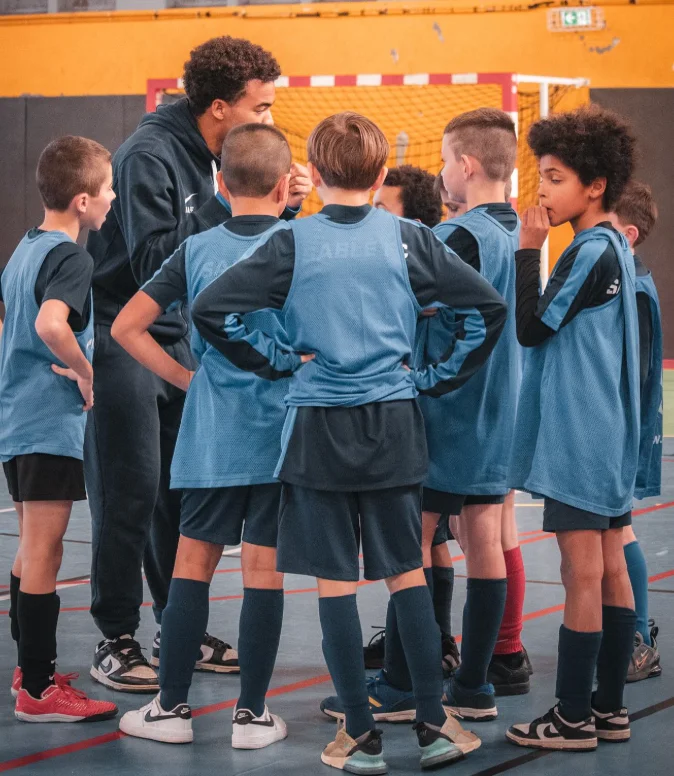
The goalkeeper: a key player in futsal
The goalkeeper’s position in futsal fascinates because of how involved it is in the game. A young last line of defence is constantly distributing, dribbling past a pressing attacker or organising the defence. Coaches often say that a clever goalkeeper can make a huge difference to a team’s success, which encourages children to try this unique role.
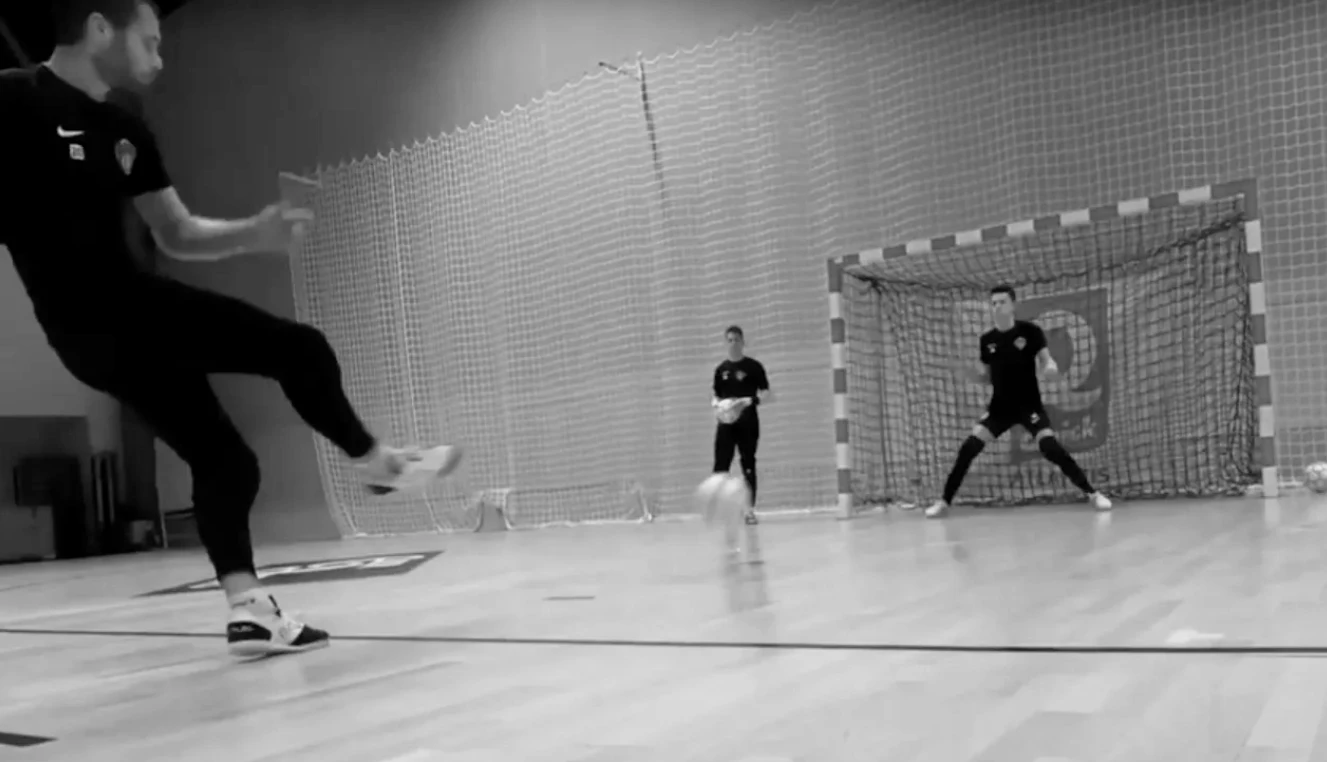
One crucial point is mastering play with the feet. Because the area is small, a futsal goalkeeper must be reactive: as soon as they receive the ball, they are often the launch pad for their team. Short distribution is the priority, and precise passes beat the opposing press. The young goalkeeper learns to read team-mates’ positions quickly, becoming an attacking organiser as well as the last line of defence.
Shots on goal are never far away. Attackers try to surprise the goalkeeper whenever they find space, which develops impressive composure in the child. Futsal coaches see the goalkeeper’s position as a catalyst for maturity: you have to handle pressure, guide your team-mates and stay focused despite the frantic pace.
Coaches also stress the mental side. The goalkeeper’s morale can waver with every goal conceded, and in futsal the closeness between players intensifies the psychological dimension. Goalkeepers learn to handle pressure and motivate team-mates. Many become captains, because they see the whole court and communicate constantly, which strengthens the defence and reassures the team in difficult phases.
Young goalkeepers find their feet quickly with specific sessions. Every well-organised club offers dedicated training focused on handling, lateral movement and precise distribution. Online videos show that a futsal goalkeeper never has time to rest, and children love that frantic rhythm. Over time, the direct duels with attackers give them the reflexes of experienced athletes, and they identify with the modern gladiators who guard the goal.
Clubs value versatility. Many train youngsters to alternate between outfield player and goalkeeper, so the child realises they can influence the score from different positions. The most enthusiastic explore the flying goalkeeper, or power play, in which the goalkeeper becomes a surprise attacker. See also why futsal goalkeepers do not wear gloves.
The goalkeeper’s mindset and place in the team
Playing in goal builds solid confidence. Children who take on the role discover how their presence influences the rest of the group: if they stay calm after conceding, they naturally reassure their team-mates. Mental preparation exercises help them refocus and manage their emotions.
Encouraging words to team-mates complete this mental work. An outgoing goalkeeper who communicates clearly supports the defence and coordinates positioning. Coaches value these interpersonal skills, which are crucial to a futsal team’s cohesion. Matches are also won thanks to the mental strength each player builds in tense moments.
Parents’ view of the position changes. They discover that it goes far beyond making saves: the young athlete learns to lead their peers on the court, acting like a real captain, ready to own their mistakes and celebrate shared successes. Futsal becomes a tool for personal development, on and off the court.
Senior teams inspire children. In big matches, goalkeepers often play a decisive role, venturing out of their area to surprise the opponent. Children watch these actions, understand the importance of footwork and want to reproduce those low passes and reflex saves in training.
Equipment, clubs and continuous progress
Futsal equipment adapts to every age. Shoes provide perfect grip, and technical shirts and shorts make movement easier. Parents ask their club or other families which brands to choose: junior ranges from Nike, Joma, Kelme, Mizuno, Adidas and others suit every budget. The idea is to give the child optimal comfort so they can freely express their potential. See our equipment guide.
Balls meet specific standards. They are designed to bounce less than 11-a-side balls, which improves the precision of technical skills. Clubs and associations often provide training equipment such as cones, bibs and mini-goals, so families can focus on the essentials and follow the coaches’ advice.
Under the guidance of clubs and associations, the discipline offers a wide variety of game situations. Sessions combine skill-focused exercises and short matches in which the child applies new skills. The teaching approach aims for steady progress, with levels adapted to each age group. Parents notice their child growing in confidence and daring to try more skills in matches.
In recreational futsal, competition is not compulsory. Some children prefer to play in a club without entering regional leagues, enjoying improving their technique without the pressure of official matches. Others want to test themselves competitively. Futsal schools often organise friendly tournaments in which youngsters discover the adrenaline of a match that matters, in a supportive atmosphere.
Coaches remind parents of the importance of combining enjoyment and progress. Overly competitive behaviour can dampen the enthusiasm of a child who mainly wants to have fun. Clubs keep the atmosphere positive by highlighting each player’s strengths: the most motivated develop their team play, while the shyest gain confidence through playful exercises.
Youth competitions are gaining visibility, and young fans also follow the big professional clubs. They learn that in Portugal, fixtures such as Sporting v Benfica draw huge crowds, that Italy follows its Serie A passionately, and that the women’s game is growing fast, with the first FIFA Futsal Women’s World Cup.
Outlook and practical checklist
Futsal development continues with ongoing commitment from families and coaches. Some clubs invite outside specialists to work on the mental or tactical side. In high-level structures, the pace is demanding, with several training sessions a week and video analysis, and the child learns to question themselves, correct weaknesses and build on strengths.
Here are some key points for any family interested in futsal for kids:
- Check the overall atmosphere of the club or association (friendly and focused on progress).
- Choose futsal equipment suited to the child’s build and playing style.
- Favour regular training to help technical skills sink in.
- Alternate recreational phases and more competitive moments to keep the desire and motivation.
- Encourage your child without overloading them, listen to how they feel and adapt to their pace.
Coaches’ experience shows that passion builds session by session. A child in a stimulating environment is usually keen to improve, and matches become intense occasions in which every player feels they have a mission.
Filmed sessions help break down positioning, marking errors and distribution choices. This approach is not reserved for the elite: many amateur clubs use video in their coaching. Parents can see their child’s progress, and young players love seeing themselves in action and are often more receptive to advice when they can see the scene on screen.
A summary table to show the variety of futsal for children:
| Aspect | Description | Aims |
|---|---|---|
| Technique | Smaller court, special balls, many duels | Develop control and speed of execution |
| Organisation | Small teams, quick rotations, power play | Encourage cohesion, transitions and game intelligence |
| Equipment | Indoor shoes, breathable kit, protection | Ensure comfort and safety |
| Training | Short sessions, intensity, varied exercises | All-round progress and keeping the desire |
| Goalkeeper’s role | Constantly involved, distribution with the feet | Handle pressure and guide the team |
Some families go further with development camps run by various organisations, where youngsters immerse themselves in semi-professional training with friendly matches. Parents often notice a leap in tactical understanding and physical commitment. These camps sometimes include workshops on the mental side or nutrition, proving that futsal is part of a broader set of skills.
Futsal’s growth is particularly visible in parts of Europe, from the Sporting–Benfica rivalry in Portugal to Italy’s renowned championship. These different paths show that futsal is not a mere offshoot of football but a discipline in its own right, supporting a young athlete’s all-round development.
Seeing a child proudly wear their club shirt, talk about training non-stop and look forward to the next match is one of the greatest satisfactions for those around them. Coaches work to feed this thirst for progress while keeping a climate that favours learning. A well-supported child stays motivated and gets involved at their own pace. For more advice, see our training guide.