The ultimate guide to choosing futsal shoes: performance and comfort
A non-marking sole, the right fit, leather or synthetic: everything you need to choose the futsal shoes that suit your feet, your position and your budget.
In this article · 12 chapters
- Why the right futsal shoes are crucial
- Understanding the sole: the heart of grip
- Fit and comfort: your second skin
- Materials: touch, durability and weight
- Your playing style and position
- Other features to consider
- Popular futsal shoe brands
- Budget: what price for which shoes?
- Caring for your futsal shoes
- Your ideal futsal shoe selector!
- Find your ideal futsal shoe!
- Conclusion
Futsal is a dynamic, fast and technical sport that demands sharp reflexes and precise movement. On an indoor court, every step, every dribble and every shot counts. And at the heart of your performance is one essential item that is sometimes forgotten: your shoes! Choosing the right pair of futsal shoes is not just a question of style; it is a crucial decision that affects your comfort, your safety and, of course, your ability to dominate the game.
Whether you are a beginner trying to understand the basics or a veteran looking to fine-tune your kit, this complete guide will help you find your way through the world of futsal shoes. Get ready to discover how to find the perfect pair to take your game to the next level!
Why the right futsal shoes are crucial
Picture the frantic pace of a futsal match. Sudden changes of direction, explosive accelerations, sharp stops and pinpoint passes. All on a hard, smooth surface, often wooden or synthetic. Your shoes are the only point of contact between you and the court. Without the necessary grip, support and comfort, you risk not only slipping or getting injured, but also losing explosiveness and precision.
A good pair of futsal shoes is designed specifically for these challenges. They offer superior traction to stop you slipping, cushioning to protect your joints from repeated impacts, and a fit that lets you feel the ball as an extension of your foot. They are an investment in your game and your health. 🦵
“Your futsal shoes are your foundation on the court. They must give you the confidence to move without hesitation.”
Understanding the sole: the heart of grip
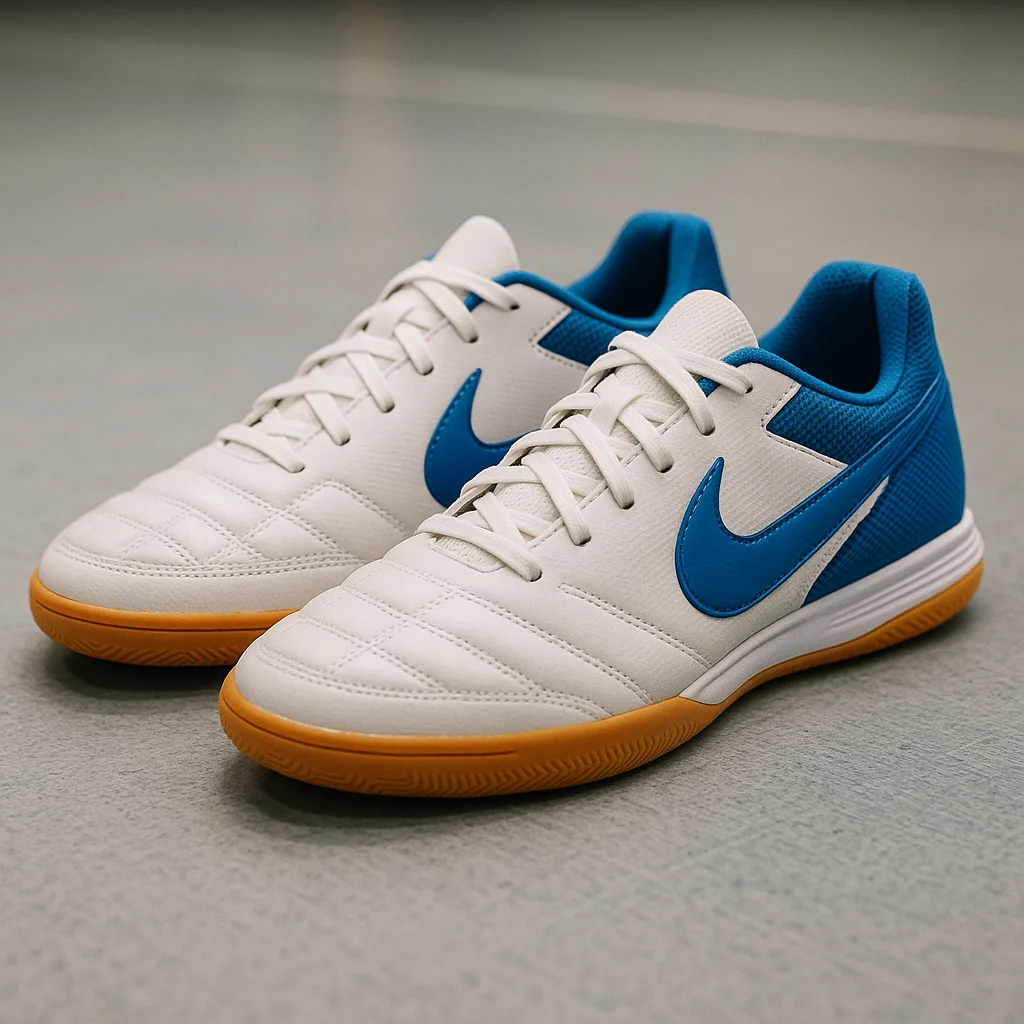
This is the most important feature of a futsal shoe. Unlike studded boots for outdoor football, futsal shoes have a flat, smooth sole.
The non-marking sole: an absolute must
Golden rule number one: the sole must be “non-marking”. It will leave no black marks on the sports hall floor. Most sports halls require it, and it is a hallmark of genuine futsal shoes.
The sole material: gum rubber
The vast majority of futsal soles are made of gum rubber. This material is chosen for its excellent grip on smooth indoor surfaces. The quality and composition of the rubber can vary from one brand to another, which directly affects grip and how long the sole lasts.
Tread patterns
Even though the sole is flat, it is not completely smooth. It has patterns designed to maximise traction. The most common are:
- Herringbone: excellent multi-directional grip, ideal for quick changes of direction.
- Circles or pivot points: allow smooth turns without straining the knees, perfect for players who pivot a lot.
- Combined patterns: many shoes combine these patterns for the best balance between grip and fluidity.
The choice of pattern depends a little on your playing style, but the key thing is that the sole is designed to grip on hard surfaces.
Fit and comfort: your second skin
A shoe that does not fit will slow you down and make you suffer. Comfort is non-negotiable.
The right size
Obvious, but crucial. Your toes should not touch the end of the shoe, but there should not be too much room either. Half a size too big can make your foot slide inside the shoe, causing blisters and a loss of control.
Support
The shoe must hold your foot well, especially at the heel and midfoot. Good support limits excessive movement of the foot inside the shoe, which prevents injuries and improves stability. Look for shoes with a good heel counter.
Cushioning
Futsal is played on hard surfaces, which can be tiring for the joints. Good cushioning, often from an EVA (ethylene-vinyl acetate) midsole or a brand-specific cushioning technology (such as Nike Air or Adidas Boost), is essential to absorb impacts and reduce fatigue.
Trying them on in store
- When? Try shoes on at the end of the day. Your feet are slightly swollen, which gives you a more accurate idea of the fit during exercise.
- How? Wear the socks you normally play futsal in. Walk, do short sprints, change direction and even jump a few times. Feel whether the shoe moves too much or pinches.
- Foot type: think about the width of your foot. Some brands and models are known to be wider or narrower. If you have wide feet, look for specific models or materials such as leather that will adapt better.
Materials: touch, durability and weight
The material of the upper (the top part of the shoe) affects touch on the ball, weight, durability and breathability.
1. Leather (full-grain leather, kangaroo leather / K-leather)
- Advantages:
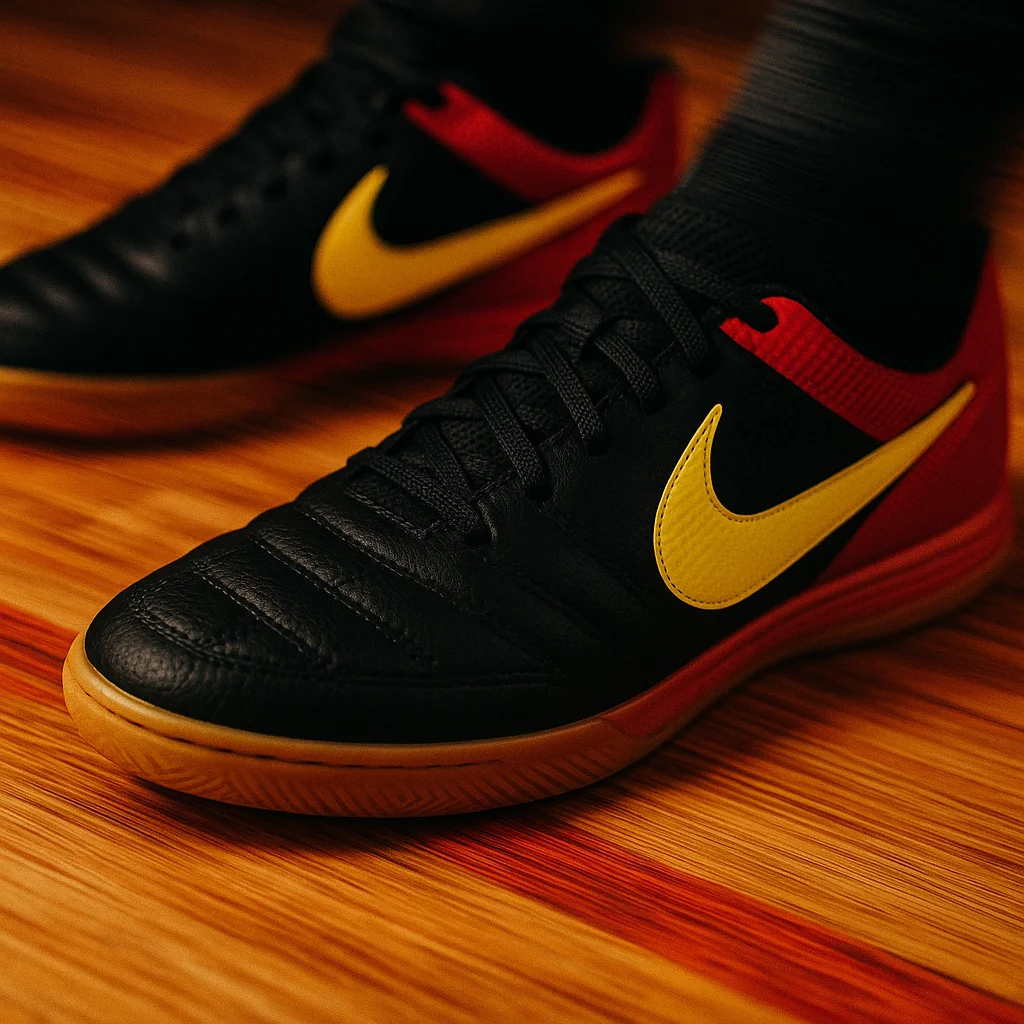
- Exceptional touch: leather is thin and moulds to the shape of your foot, giving a “barefoot” feel and excellent ball control.
- Comfort: it softens over time and fits your foot perfectly, reducing pressure points.
- Durability (if well cared for): good-quality leather is tough.
- Drawbacks:
- Price: usually more expensive than synthetic.
- Care: needs more maintenance (cleaning, conditioning) to keep its properties.
- Water absorption: can soak up moisture.
- Can stretch: may stretch a little too much over time.
2. Synthetic
- Advantages:
- Lightness: synthetic materials are often lighter, which helps speed.
- Durability: very resistant to wear, tearing and water.
- Price: usually more affordable.
- Low maintenance: easy to clean.
- Less water absorption: ideal for damp courts (even if that is rare in futsal).
- Drawbacks:
- Touch: can feel less “natural” than leather, although modern technologies have improved this a lot.
- Less adaptation: does not mould to the shape of the foot as much as leather.
3. Knit / mesh
- Advantages:
- Extremely light: ideal for speed.
- Breathability: excellent ventilation to keep feet cool.
- Flexibility: a sock-like feel.
- Drawbacks:
- Protection: less protection against knocks.
- Durability: potentially less durable than leather or classic synthetic.
In short: if touch and comfort are your absolute priorities, leather is an excellent choice. If you value lightness, durability and a tighter budget, synthetic is perfect. Knit materials are for those who want the lightest, closest-to-the-foot feel.
Your playing style and position
Your role on the court can also influence which type of shoe suits you best.
- Attackers and goalscorers (pivots, wingers): you want speed, lightness and an excellent touch for dribbling and shooting. Lightweight synthetic or thin leather shoes are often preferred.
- Defenders: stability, durability and protection matter. Good foot support and enough cushioning for impacts are essential. Leather or tough synthetic shoes are good choices.
- All-round and wide players: you need a balance between touch, stability and agility. A versatile shoe with good cushioning and balanced support is ideal.
- Goalkeepers: grip is vital for quick movements and dives. Cushioning also matters for landings. Some brands offer models with reinforced areas on top for kicking clearances.
To see how professionals prepare and what is at stake in top-level matches, read reports such as Palma Futsal stun Barça in the semi-finals (FR) or Borruto and Napoli Feldi in the Scudetto semi-final (FR). These matches show the intensity at which every detail of your kit counts.
Other features to consider
The heel counter
A solid, well-fitting heel counter (the stiff part at the back of the shoe) is crucial for stability and to stop the foot sliding inside the shoe, which prevents blisters.
The tongue
Some shoes have a traditional tongue, others an integrated, sock-like construction. Integrated tongues can give a snugger fit and a more uniform feel.
Weight
Lighter shoes help speed and agility, but can sometimes sacrifice a little protection or cushioning. It is a trade-off to find according to your preferences.
Breathability
Perforated materials or mesh areas help get rid of heat and sweat, keeping your feet dry and comfortable during the match.
Popular futsal shoe brands
Many brands make excellent futsal shoes. The best known include:
- Nike: with lines such as Mercurial, Phantom and Tiempo, suited to different playing styles.
- Adidas: Predator, Copa and X are familiar names, with options for control, comfort or speed.
- Joma: very popular in futsal, Joma is known for the durability and excellent value of its models (Top Flex, Mundial).
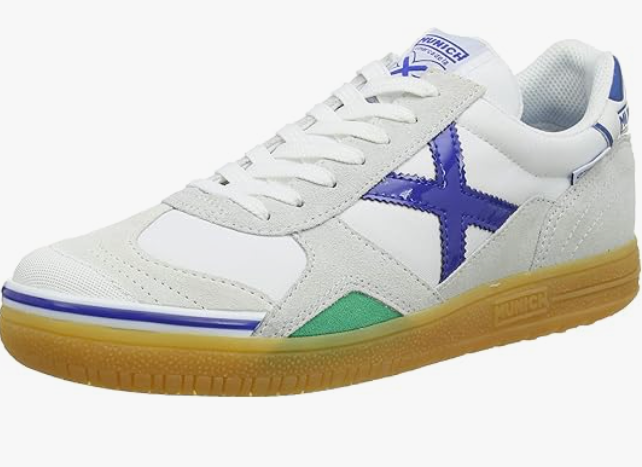
- Munich: the Spanish brand specialising in futsal (comfort, robustness and experience).
- Mizuno: known for the quality of its leather and its comfort.
- Puma: Future and Ultra, with modern designs and innovative technologies.
Do not forget: the “best” model is the one that best suits your foot and your playing style, whatever the brand. See also our comparison of the 5 best futsal shoes and our Decathlon Kipsta guide.
Budget: what price for which shoes?
The price of futsal shoes varies considerably, usually between €40 and €150 (or more for top-of-the-range models).
- Entry level (€40–70): often synthetic, with basic cushioning and support. Perfect for beginners or occasional players.
- Mid-range (€70–120): a better balance of materials (sometimes leather), improved cushioning and more advanced technologies. Ideal for regular players.
- Top of the range (€120 and over): the latest innovations in materials (kangaroo leather, ultra-light synthetics), cushioning and design. For demanding or professional players.
Investing in a higher-quality pair may seem expensive at first, but it can extend the life of your shoes and improve your comfort and performance in the long run.
Caring for your futsal shoes
To make your futsal shoes last and keep performing, good care is essential:
- Clean them after every match: wipe the sole and upper with a damp cloth to remove dust and dirt. For stubborn marks, use a soft brush and a little mild soap.
- Drying: never put them in a tumble dryer or near direct heat (radiator). Let them air-dry, away from direct sunlight. You can stuff them with newspaper to absorb moisture and help them keep their shape.
- Odours: use a deodorising spray or charcoal sachets to prevent bad smells.
- Storage: keep them in a dry, well-ventilated place.
Good care keeps your shoes in top shape for many matches to come. For more advice on kit, see the Gear section.
Your ideal futsal shoe selector!
Answer a few questions to find the type of futsal shoes that best suits your needs.
Find your ideal futsal shoe!
Conclusion
Choosing the right pair of futsal shoes is an essential step for any player, amateur or experienced. They directly influence your agility, your ball control, your comfort and, above all, your safety on the court. Take the time to assess your needs according to your playing style, the shape of your foot and your budget. Do not hesitate to try several models and ask specialist sales staff for advice.
Once you have found the perfect pair, you will feel the difference immediately: more confidence in your movements, a better touch on the ball and, above all, far more enjoyment. So lace up your new weapons and get ready to shine on the futsal court!