Mastering ball control in futsal: the undeniable advantage of the sole
Stop the ball dead, drag it back, push and pull: the sole of the foot is the futsal player's best friend. The key techniques and drills to master it.
In this article · 9 chapters
- Why ball control is king in futsal
- The sole: futsal’s well-kept secret
- Key techniques with the sole
- Drills to master the sole
- The extra benefits of mastering the sole
- Common mistakes to avoid
- Building the sole into your game
- Test your knowledge of sole control!
- Conclusion: the sole, your best friend in futsal
Futsal, the fast and dynamic game, demands exceptional technical mastery. Every touch counts, every pass must be precise and every movement of the ball must be under total control. In an environment where space is limited and decisions are made in a split second, impeccable ball control is not just an asset but an absolute necessity. At the heart of it is an often underrated but fundamental technique: using the sole of the foot.
While many players from traditional football are used to controlling the ball with the inside or outside of the foot, futsal highlights the superior effectiveness of the sole. It is not a mere technical detail but a philosophy of play that opens the door to unmatched agility, ball protection and speed of execution. Understanding and mastering this technique can turn an average player into a real magician on the ball, able to move through the tightest spaces with disconcerting ease.
This complete guide explains why the sole is so crucial in futsal, how to master it through specific techniques and drills, and how it can give you a decisive edge on the court. Get ready to change the way you think about ball control.
Why ball control is king in futsal
Futsal is a game of details. On a smaller court, with fewer players and rules that favour quick, technical play (such as the 4-second rule for restarts), every possession is precious. Losing the ball, even for a moment, can quickly give the opponent a chance. That is why ball control, the ability to “keep the ball close”, is the cornerstone of any successful strategy.
Good ball control allows:
- Keeping possession: the basics. If you do not lose the ball, the opponent cannot score.
- Creating space: a player who masters the ball can draw defenders and open lanes for team-mates.
- Fluid play: clean control leads to accurate passes and quick combinations that disrupt the defence.
- Fewer mistakes: fewer lost balls, fewer dangerous situations for your own goal.
- Playing under pressure: pressing is intense in futsal. A player who controls the ball confidently can resist the pressure and find solutions. See our article on pressing while outnumbered (FR).
In this context, the sole emerges as the most reliable and effective tool for reaching that level of control.
The sole: futsal’s well-kept secret
Unlike football on grass, where players often use the inside or outside of the foot to stop the ball, the sole is the futsal player’s closest friend. Why? Several reasons explain this strong preference:
- An ideal contact surface: the sole is flat and wide, ideal for “catching” the ball and stopping it instantly. It works like a magnet that keeps the ball from bouncing away.
- Better control of bounce: the futsal ball bounces less than a football. The sole absorbs the ball’s energy and “glues” it to the floor, reducing unpredictable bounces, which is crucial on a hard surface.
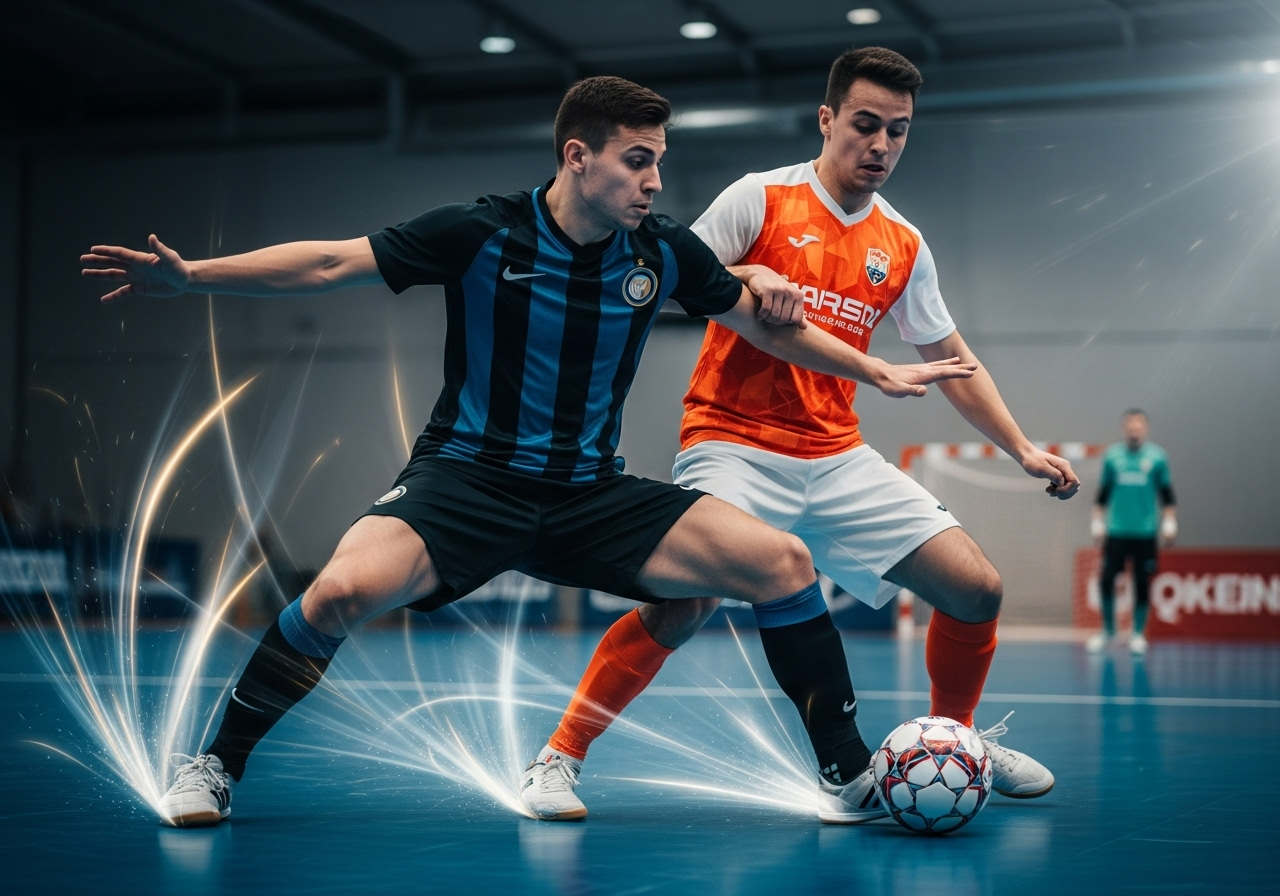
- Protecting the ball: by putting the foot on the ball, a player can shield it effectively from defenders. It is a natural barrier that makes it hard for the opponent to steal it.
- Quick changes of direction: the sole allows quick movements and sharp changes of direction. You can stop the ball, drag it back or push it sideways in the blink of an eye, without having to reposition your body much.
- Versatility: the sole is not only for control. It is also used for short passes, dribbling and even shooting in some situations.
“In futsal, the sole is not an option; it is an extension of the player’s thinking. It sets the rhythm, protects the ball and opens up opportunities.”
Key techniques with the sole
Mastering the sole is not just about stopping the ball. It is a repertoire of movements that, combined, make a player elusive. Here are the fundamental techniques:
1. The sole trap
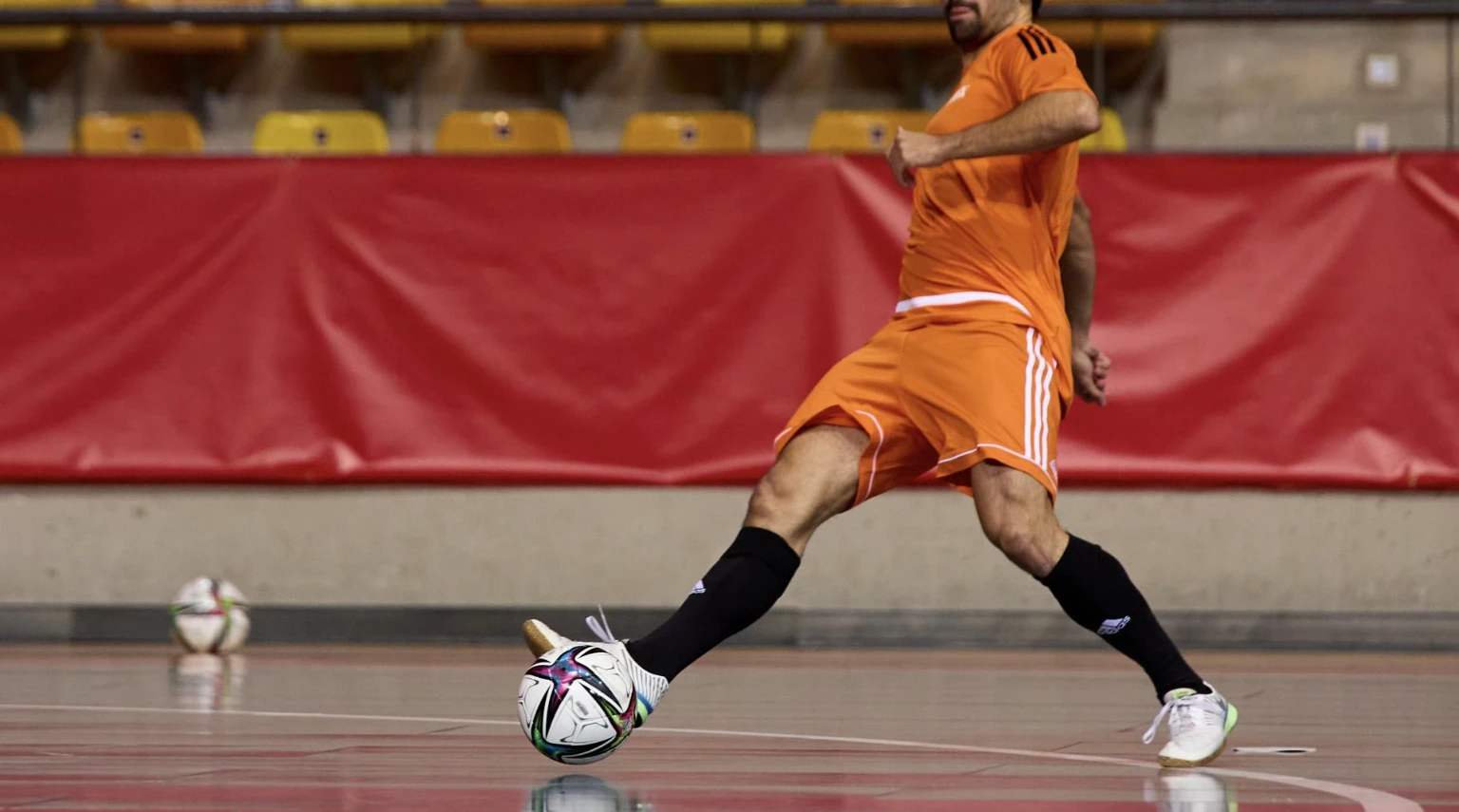
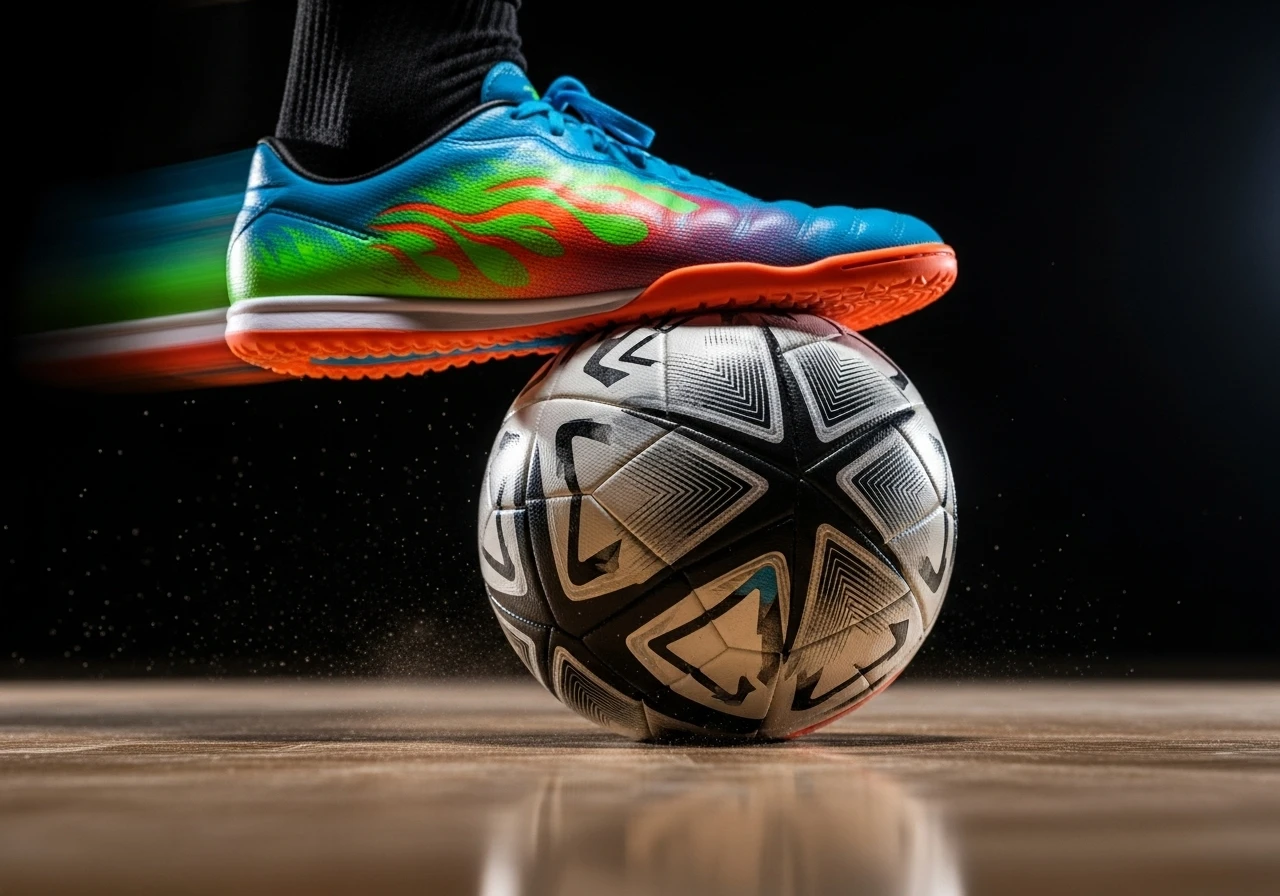
The most basic and fundamental technique. When the ball arrives, rolling or in the air (at ankle height), the player puts the sole of the foot on it, stopping it instantly.
- How to do it:
- Anticipate the ball’s path.
- Place your dominant foot (or the nearest foot) slightly above the ball.
- At impact, “cushion” the ball by placing the sole gently on top, applying light pressure. The knee should be slightly bent to absorb the impact.
- The ball should stop dead under your foot, or very close to it.
- When to use it: to receive a pass, to stop the ball before passing or dribbling, or to protect it from an opponent.
2. The pull-back (drag)
An essential technique for turning or changing direction quickly. After stopping the ball with the sole, the player drags it back, often turning at the same time.
- How to do it:
- Stop the ball with a sole trap.
- Without lifting the foot, slide the sole over the ball, dragging it back, usually between your legs or behind your standing foot.
- At the same time, pivot on your standing foot to change direction.
- When to use it: to escape a defender coming from behind, to turn and face play, or to create space in a crowded area.
3. The push-pull
A dynamic dribbling technique that uses the sole to move the ball quickly forwards and backwards, unbalancing the defender.
- How to do it:
- Put the sole on the ball.
- Push the ball slightly forward with the front of the sole.
- Immediately drag it back with the sole.
- Repeat, alternating feet if needed.
- When to use it: to keep the ball very close while moving forward, to slow the play, or to draw a defender and go past with a change of pace.
4. The sideways drag
Similar to the pull-back, but the movement is sideways rather than backwards.
- How to do it:
- Put the sole on the ball.
- Drag the ball to the side (left or right) with the sole, moving your body in the same direction.
- When to use it: to avoid a tackle, to dribble past a defender on the side, or to open a passing angle.
Drills to master the sole
Mastery of the sole comes with repetition. Here are some exercises you can do alone or with team-mates:
Drill 1: static sole touches
- Aim: develop feel and control.
- Description: place a ball in front of you. Put the sole of one foot on it, then switch feet, alternating quickly. The ball should stay still or move very little. Focus on a light touch.
- Duration: 3–5 minutes, 3 sets.
Drill 2: push-pull in a straight line
- Aim: master the forward-backward movement on the move.
- Description: move forward using only the sole to push and drag the ball, which should stay glued to your foot. Go back and forth over 5–10 metres.
- Duration: 5–7 minutes, 3 sets.
Drill 3: the box drill
- Aim: practise the sole trap and changes of direction.
- Description: mark out a 2 × 2-metre square with cones. Dribble inside the square using mainly the sole to stop, drag and push the ball. Try not to touch the cones.
- Variations:
- Use only one foot.
- Alternate both feet.
- Make figures of eight inside the square.
- Duration: 10 minutes, 2–3 sets.
Drill 4: passing and sole control
- Aim: build the sole into passing situations.
- Description: with a partner, stand 5–7 metres apart and pass along the floor. Every time you receive the ball, stop it with the sole before passing it back.
- Variations:
- Pass with the inside of the foot, control with the sole.
- Pass with the sole, control with the sole.
- Add a passive defender to simulate pressure.
- Duration: 10–15 minutes.
Drill 5: sole slalom
- Aim: improve agility and sole precision on the move.
- Description: place 5 to 7 cones in a line about 1 metre apart. Slalom through them using mainly the sole to control and direct the ball. Focus on short, precise touches.
- Duration: 5–7 minutes, 3 sets.
To analyse your performance and identify what to improve, see our guide to the post-match review (FR).
The extra benefits of mastering the sole
Beyond control, expertise with the sole brings benefits that affect a player’s whole game:
1. Faster decision-making
Good sole control means the ball is always under your command. That gives you more time to look up, read the game and make the best decision (pass, dribble, shoot). Not having to chase a badly controlled ball frees up mental resources.
2. Optimal ball protection
Duels are frequent and intense in futsal. Being able to “hide” the ball under the sole while shielding it with your body is a major asset to keep possession against an intense press.
3. Short, precise passes
Although usually associated with control, the sole can also be used for short, precise passes, especially backwards or for quick lay-offs. It is a delicate touch that can surprise the opponent.
4. Fewer mistakes and fouls
Mastered control reduces the risk of losing the ball in dangerous areas, which limits the situations in which the opponent can put you under pressure and fewer defensive emergencies that lead to accumulated fouls. Fewer lost balls also means fewer needless defensive runs.
5. More confidence on the court 💪
Knowing you can control the ball in any situation, even under pressure, gives you immense confidence. That confidence feeds into your whole game, making you bolder and more creative.
Common mistakes to avoid
Intuitive as the sole may be, some mistakes can hold back your progress:
- Pressing too hard: crushing the ball with the sole makes it bounce or roll away. The touch must be light and cushioned.
- Always looking at the ball: once you have the basic technique, force yourself to look up and see the game.
- Not bending the knees: stiff legs make control less fluid and absorb the ball less well.
- Using only the sole: crucial as it is, the sole should complement the other surfaces (inside, outside) for a complete game. Do not become predictable.
- Neglecting both feet: futsal demands two-footedness. Practise the sole with both feet equally.
Building the sole into your game
Mastering the sole must not remain an isolated technique. It should fit naturally into the way you play and into your team’s futsal formations.
For players:
- Think “first-touch control”: your first touch after receiving the ball should ideally be with the sole, to secure it.
- Use the sole to slow things down: if you are under pressure with no option, put your foot on the ball to win a few fractions of a second.
- Use it for creative dribbling: combine the pull-back with a change of pace to beat an opponent. See our guide to dribbling in futsal.
- Be aware of space: the sole is excellent in tight spaces. Use it to move through traffic.
For coaches:
- Insist on sole drills from a young age: it is a fundamental skill.
- Create small-sided games: small games force players to use the sole because of the limited space and the intensity.
- Assess the use of the sole: in your post-match reviews (FR), watch how players use (or do not use) the sole under pressure.
Mastery of the sole is a hallmark of great futsal players, from the agility of a Benfica (FR) player to the precision of a Meta Catania (FR) athlete. It is a skill that marks out the players who can dictate the rhythm of the game.
Test your knowledge of sole control!
Conclusion: the sole, your best friend in futsal
Controlling the ball with the sole is not a secondary technical skill in futsal; it is a fundamental skill that underpins almost every aspect of the game. It gives better ball protection, quicker changes of direction, better decision-making and, ultimately, more confidence on the court.
By adding the sole trap, the pull-back and the push-pull to your repertoire and practising them diligently, you will transform your game. You will be able to move through the tightest spaces, resist pressure from defenders and become a true master of the ball.
Beginner, experienced player or coach: time spent perfecting the sole is an investment that pays huge dividends. It is the key to unlocking your full potential in futsal, one precise touch at a time. So put on your futsal shoes and put your sole to work! Your game will thank you.