
Unlock the attack: mastering the art of the pivot in modern futsal
Pin the defence, lay off, turn and finish: how to use the pivot in the final third, with a three-zone drill inspired by Portugal coach Jorge Braz.
Futsal, a fast and spectacular sport, demands sharp technical and tactical mastery. Among the many attacking strategies, using the pivot is often decisive to unsettle defences and create scoring chances. This article explores the importance of the pivot in the final third, based on a drill proposed by Jorge Braz, a highly respected name in futsal and Portugal’s national team coach.
The pivot: a centrepiece of the attack
The pivot is not simply a player standing with their back to goal. They are an anchor point, a creator of space, a distributor and, of course, a finisher. Their ability to shield the ball, get free and combine with team-mates is essential to break through defensive lines. See our guide to the 3-1 system and the pivot.
Why use the pivot?
Using the pivot brings several tactical advantages. It lets you:
- Pin the defence: a pivot forces the opposing team to concentrate its marking, creating space for the other attackers.
- Vary the play: the pivot can hold the ball with their back to goal, lay it off or turn to attack the goal directly. This versatility makes the attack less predictable.
- Create overloads: by drawing several defenders, the pivot frees space for team-mates and creates numerical superiority.
A drill inspired by Jorge Braz: targeted training
Jorge Braz’s drill focuses on the skills needed to use the pivot effectively in the final third. It is a structured session that emphasises decision-making, individual technique and team play.
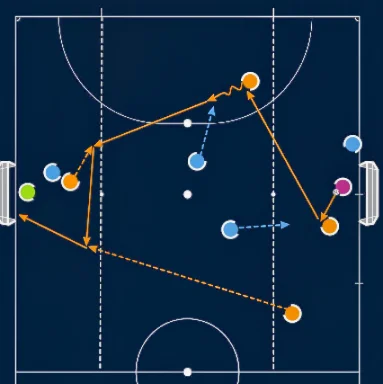
Organisation of the drill
The drill takes place on half a court divided into three zones. The central zone, 10 metres wide, is a transition zone. Two teams of four players (plus a goalkeeper) play in a 3-1 shape. Each team has a pivot who must stay in their attacking zone and cannot defend.
How it works
The team in possession must find its pivot in the attacking zone. The pivot can then shoot or lay the ball off to a team-mate, who is then allowed to join them in the attacking zone. The defending team must leave one player marking the pivot, which creates a three-against-two overload for the attacking team.
The ideal pivot profile
The pivot needs a specific set of skills to excel in this crucial role.
Technical skills
- Shielding the ball: holding the ball with the back to goal, even under pressure.
- Receiving the ball: controlling it in difficult positions.
- Beating the defender: getting past their marker one-on-one.
- Laying off to a team-mate: accurate lay-offs to launch attacks.
- Turning with the ball: turning quickly to attack the goal.
Tactical skills
- Availability: always being available to receive the ball.
- Scanning: reading the situation quickly to make the right decisions.
- Combining with a supporting player: creating chances with team-mates.
- Positioning: getting into positions from which they can receive, turn or combine.
The pivot’s impact on the game
Using the pivot well can transform a futsal team. It creates scoring chances, controls the tempo and unsettles opposing defences. The pivot is a valuable asset for any ambitious team. See also how to find the pivot to beat the press.
Conclusion: master the pivot, master futsal
Jorge Braz’s drill is an excellent way to develop the skills needed to get the most out of the pivot. With its focus on individual technique, decision-making and team play, it helps players become effective, formidable pivots. So do not wait: build the pivot into your strategy and dominate the court!
Want to learn more winning futsal strategies? Explore our Training section.